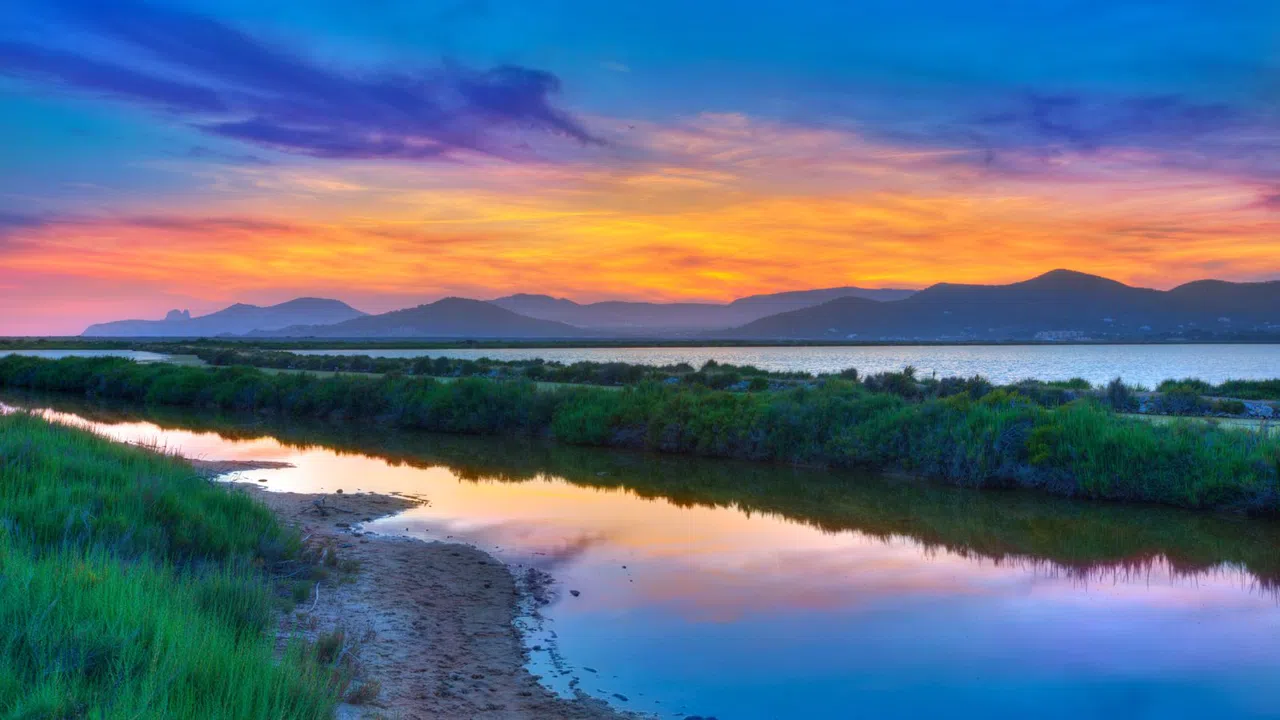

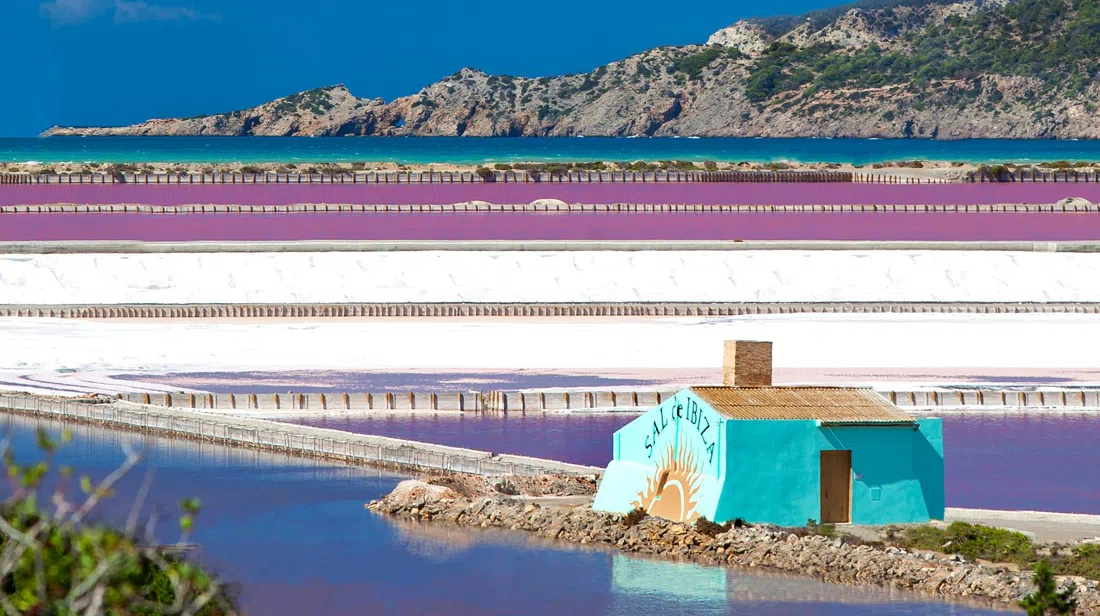
The first thing you notice at Ses Salines isn't sound, it's light — flat white pans stretching to the horizon, throwing back the sun so hard the flamingos standing in them look cut from paper. Walk the perimeter track at the wrong hour and you'll have it almost to yourself, just the crunch of gravel and the occasional car easing toward the beach car park. This is where Ibiza's money came from for over two thousand years, long before anyone had heard of a nightclub here, and the salt is still being pulled from the water today, exactly as it always was.
The Salt Flats Themselves
Ses Salines Natural Park (Parc Natural de ses Salines d'Eivissa i Formentera), in the island's flat southern corner, is the reason every other stop on this list exists. It's a 2,700-year-old working salt operation and a UNESCO-listed nature reserve at the same time, which is a strange combination until you're standing in it. The pans are still harvested commercially in late summer, and in peak season the reserve holds over 850 flamingos, wading in loose colonies across the shallow pink-tinged water. There's no booking system and no entry fee — you drive or walk in, park at Ses Salines, and follow the tracks between the pans. Tour buses use the same car park as everyone else, so it copes with groups fine, though the birds are more relaxed early or late in the day, away from midday heat and midday crowds. Bring water and proper shoes; there's no shade out on the flats themselves, and the white surface reflects heat back at you in a way that catches people out.
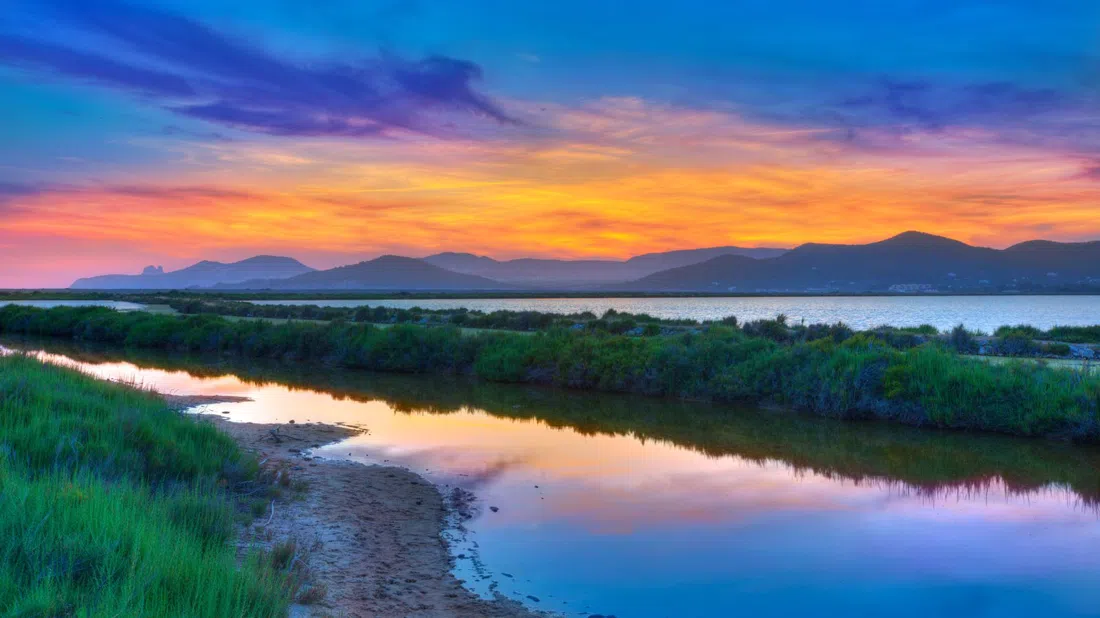
The salt itself has been worked here since the Phoenicians, who founded the island partly because of these flats — Ibiza salt travelled the Mediterranean as a preservative for fish and meat long before refrigeration existed, and for centuries it was worth roughly its weight in the things people traded it for, which is where "white gold" isn't just a nice phrase for a headline. The Romans expanded the works, the Moors refined the channel system, and the pans you're walking past today are still laid out on largely the same geometry.
The Salt, in Your Hand
A short drive or a flat ten-minute walk from the flats themselves, SAL de IBIZA — The Store in Ses Salines is the place to actually understand what you've been looking at. This is the company still hand-harvesting and stone-milling salt from the Salinas the traditional way, and the shop is a tasting counter as much as a retail point — flaky sea salt, salt mixed with island herbs, smoked variants, that kind of thing. Tins start around €6, tastings are free or close to it, and it's genuinely built for walk-in groups rather than needing anything arranged in advance. If you only do one "educational" stop on this list, make it this one — it's the difference between admiring a landscape and understanding an economy that ran on it for two and a half thousand years.
Beach Bars and Chiringuitos
The beach that runs alongside the salt flats has its own layered history, and the string of chiringuitos along it tell it best if you know where to sit.
Sa Trinxa, on Ses Salines beach, has been open since 1980 and is the most laid-back of the lot — plastic chairs, no reservations, a genuine walk-up spot that predates most of what people now associate with Ibiza's beach-club culture. There's no door policy because there's no door: you turn up, you find a spot if one's free, and in July or August that might mean a short wait. It suits small groups fine, but don't expect table service theatre — it's closer to a village bar that happens to be on sand.

Further along, Jockey Club Salinas, also on Ses Salines beach, is an early-90s institution with a longer pedigree than most of its neighbours and does take group bookings — worth doing in July and August specifically, when walk-up tables are unreliable. It's the more "proper lunch" option of the beach's chiringuitos, food-forward rather than purely a drinking spot.
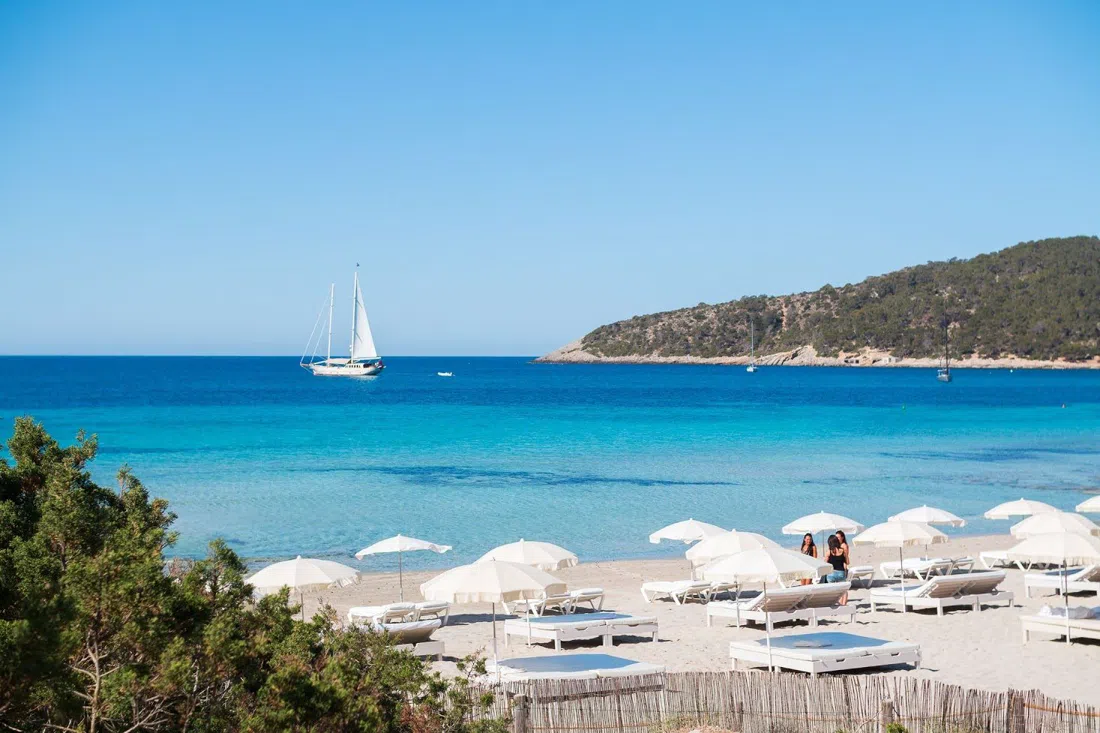
Beso Beach Ibiza, roughly mid-way along the same stretch, reopens for the 2026 season on 1 May and is a solid mid-tier lunch stop that takes both groups and boat arrivals — useful if you're combining the beach day with a charter, and worth booking ahead once the season is properly underway.
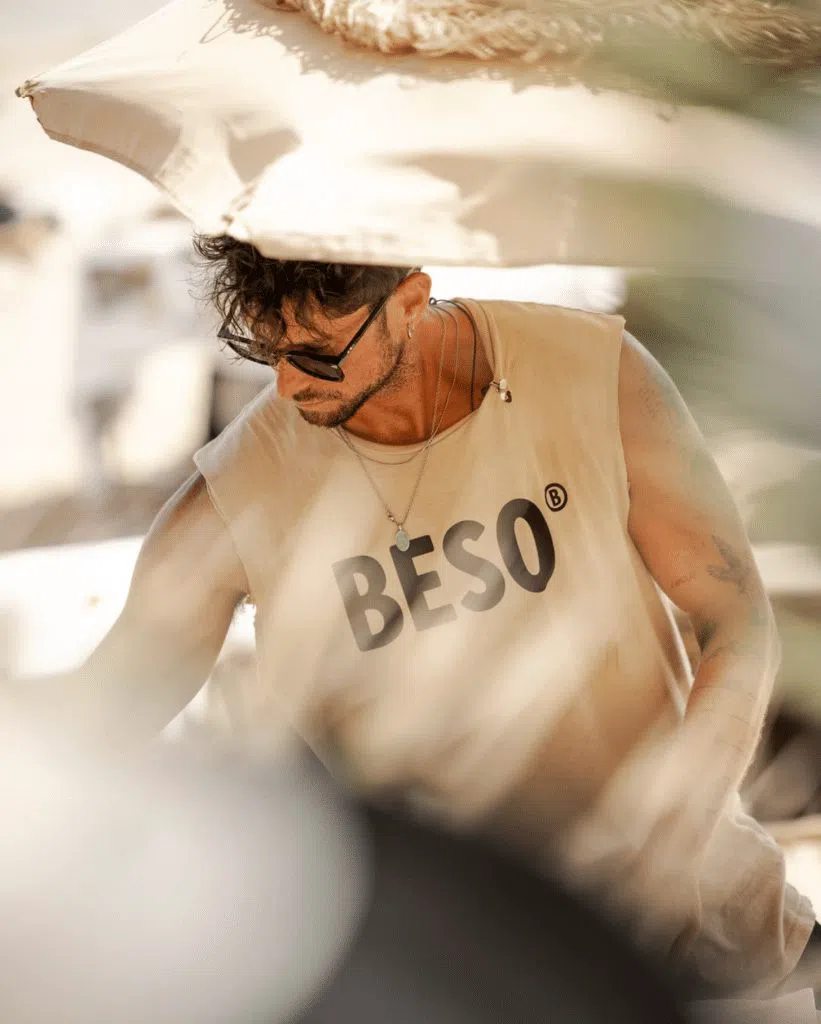
Malibu Beach Club Ibiza, also on Ses Salines beach, is known locally as the coolest of the chiringuitos on this stretch — still a casual walk-up in spirit, small groups are fine without arranging anything, but loungers and tables are worth pre-booking in high season if you want to actually sit rather than stand with a drink.

For something quieter and open beyond the summer crush, La Escollera, on the beach near Es Cavallet, has been running for almost thirty years and — unusually for this coast — stays open year-round, making it a genuine local meeting point in winter as much as a tourist stop in August. It takes reservations for groups and is the reliable, currently-verified alternative now that its old neighbour Chiringay has permanently closed. If you want a Salinas lunch that isn't purely a summer performance, this is it.
History Standing Guard
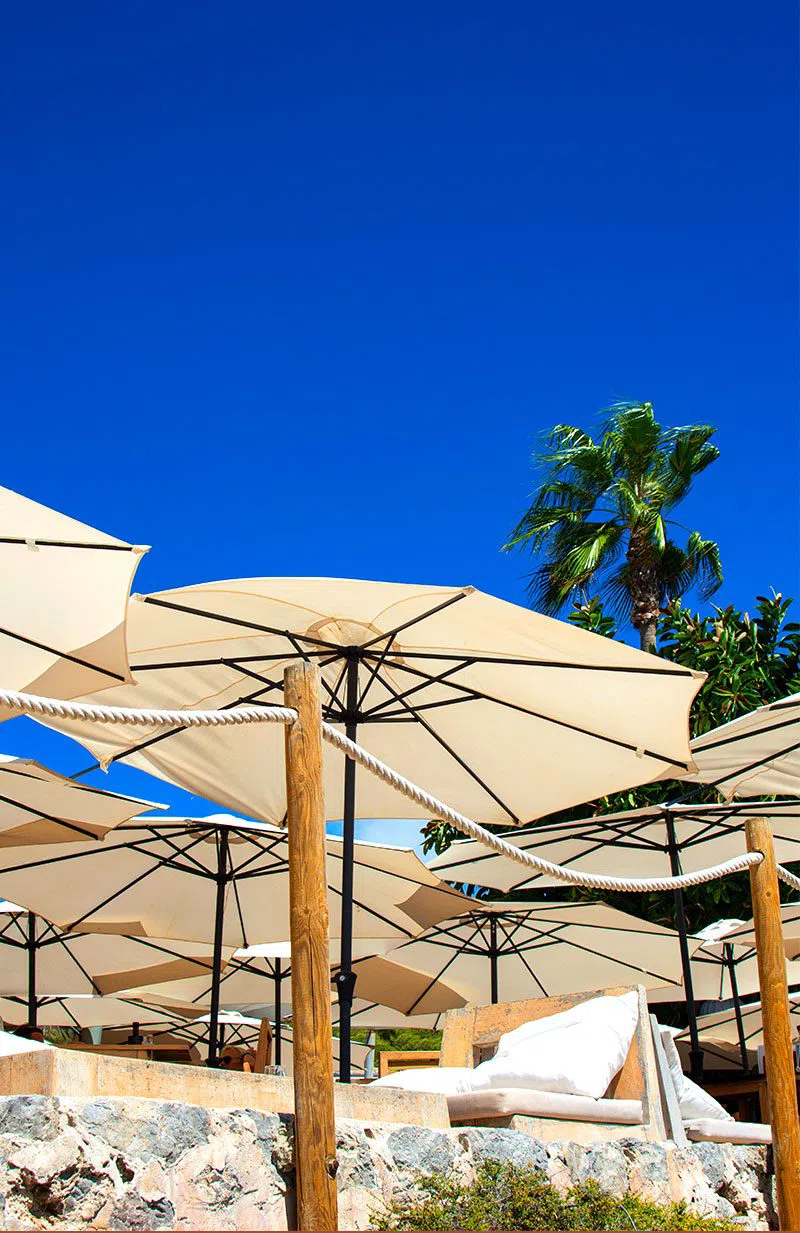
Salt worth that much needed defending, and two sites here tell that half of the story.
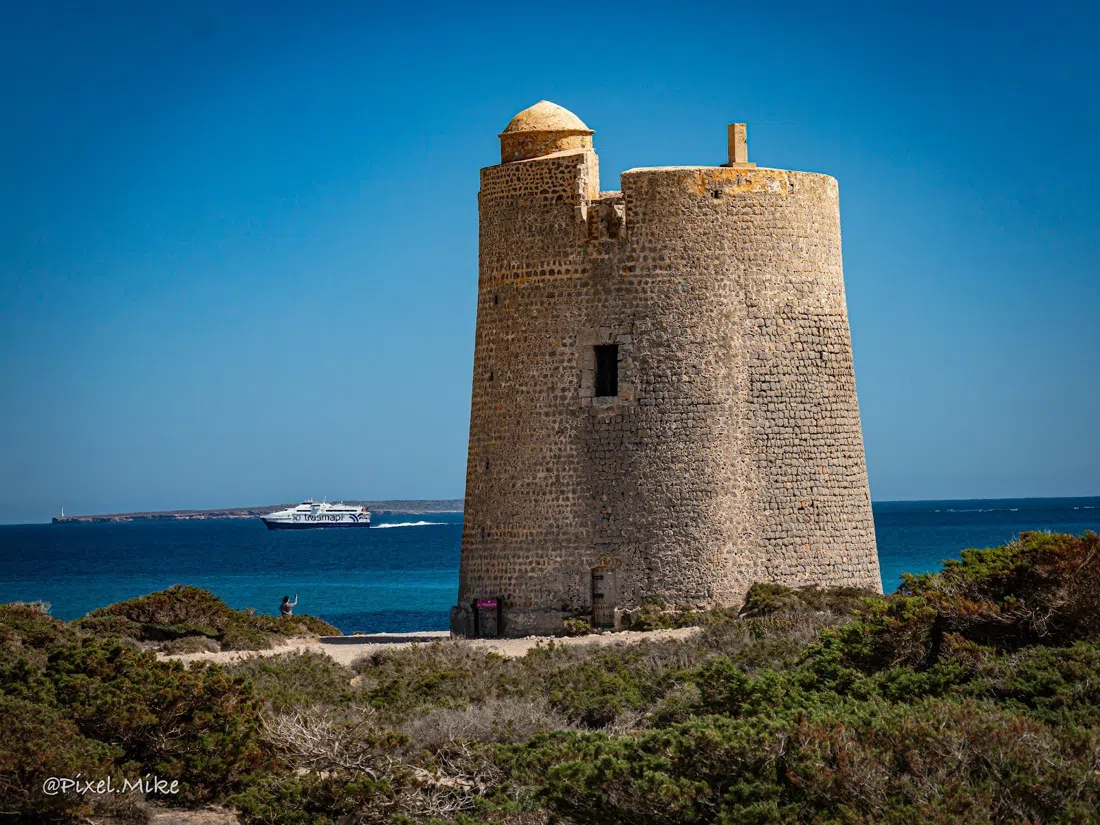
Torre de ses Portes, an open-air watchtower at the park's southern edge, was built specifically to guard the salt trade from Barbary pirate raids and restored in 1975. It's unstaffed and freely walkable in any group size, no ticket, no schedule — just a monument you can climb around and read the coastline from, understanding in about two minutes why this particular headland mattered enough to fortify.
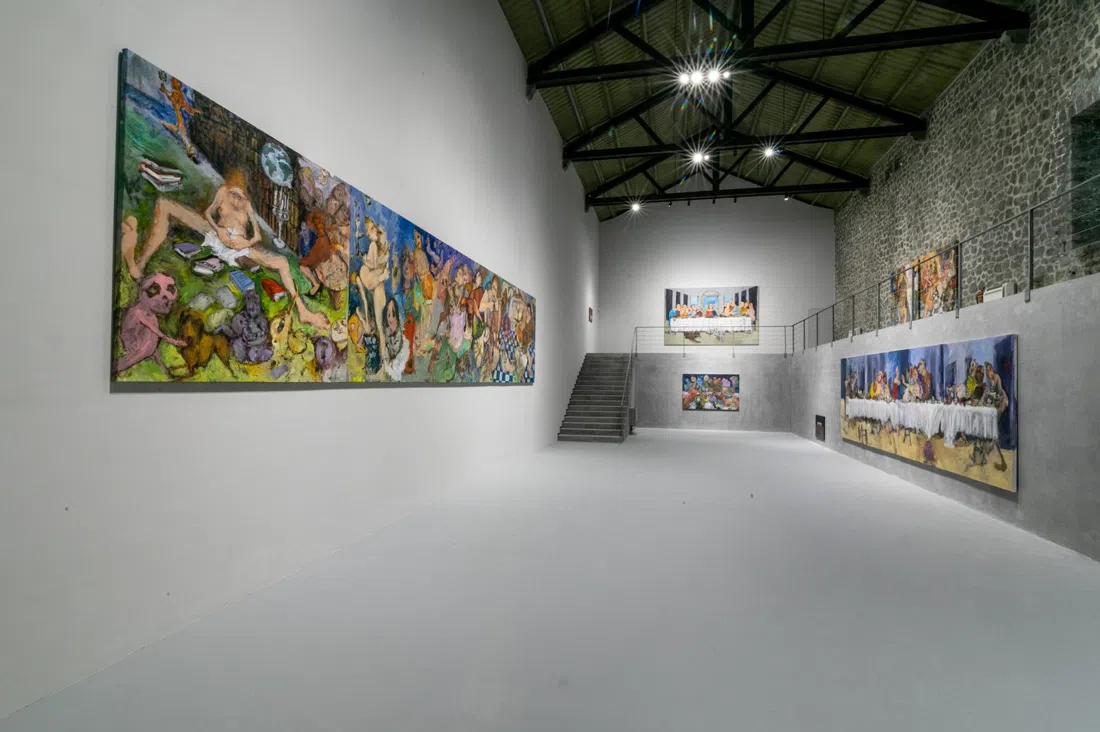
Fundación La Nave Salinas, also in Ses Salines, is the clearest surviving thread between the old salt industry and what the island became culturally afterward — it's literally a repurposed salt-storage warehouse, now an art foundation. Entry is free, it's self-guided, and it needs no booking, which makes it an easy add to a day that's otherwise spent outdoors. It's a good counterweight to the flats themselves: same building type, same industry, entirely different use now.
Further South: Es Cavallet
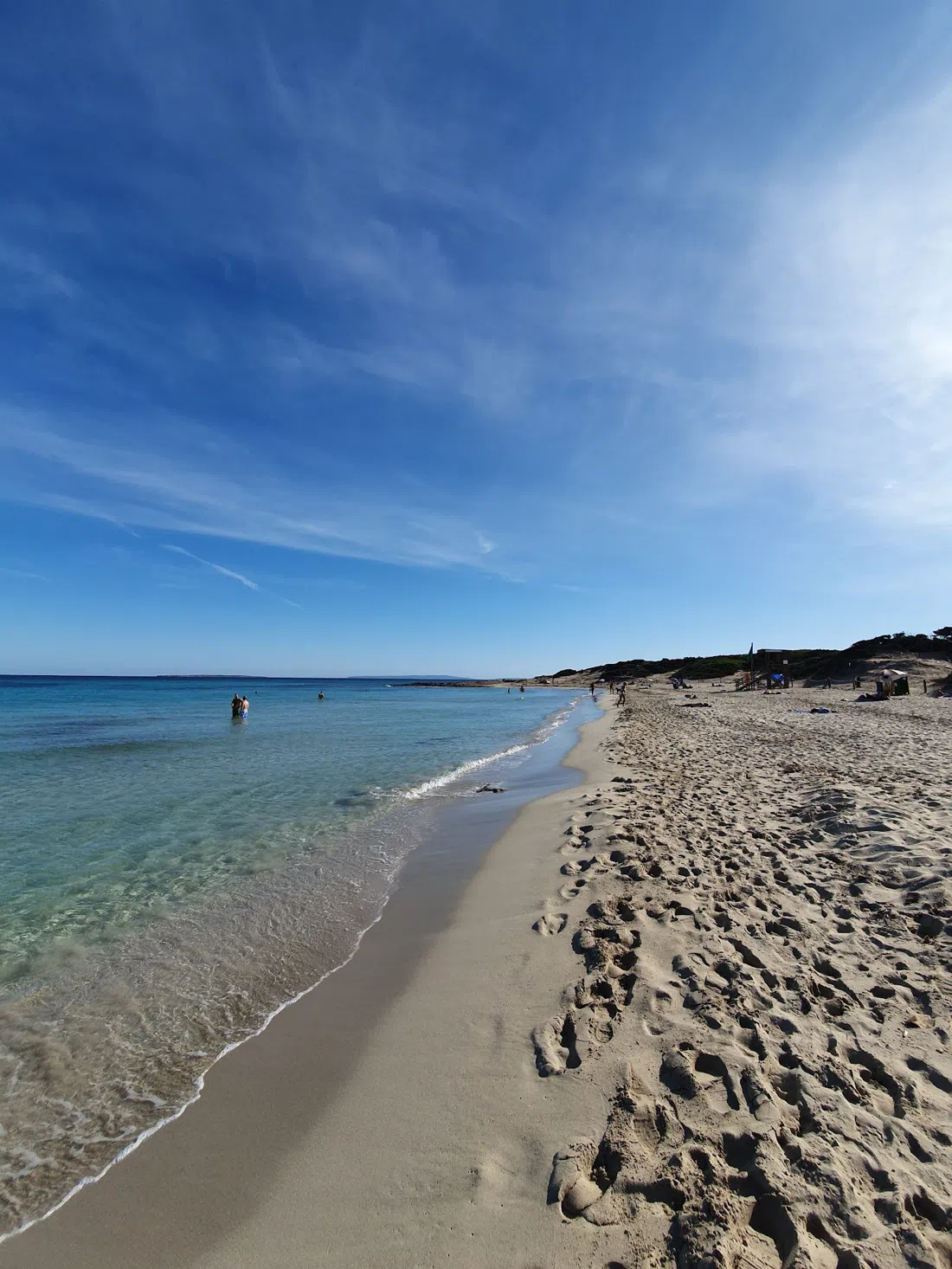
Es Cavallet beach, part of the same protected park as the salt flats, is worth the extra ten minutes south. It's public, unrestricted, and copes with groups without any real logistics — the only catch is parking, which gets tight in high season and is worth arriving early for. Es Cavallet has its own history distinct from the salt trade: it was Ibiza's original nudist and LGBTQ+ beach from the 1970s onward, and that character is still present today, looser and less commercial than the main Salinas strip a short walk north. It's a good place to end a Salinas day if you want quiet water rather than a chiringuito crowd.
Seeing It Properly: Guided Ways In
On foot along the perimeter track you'll see a fraction of what's actually here. Three operators cover the rest, aimed at genuinely different paces.
Ibiza Outdoors runs a guided Ses Salines hike built explicitly for groups, private parties and VIP bookings alike — a half-day, around €€ per person, with a guide narrating the salt-harvesting history and pointing out flamingos on the way to the old lookout tower. It's the most straightforward way to get context you'd otherwise miss walking it cold.
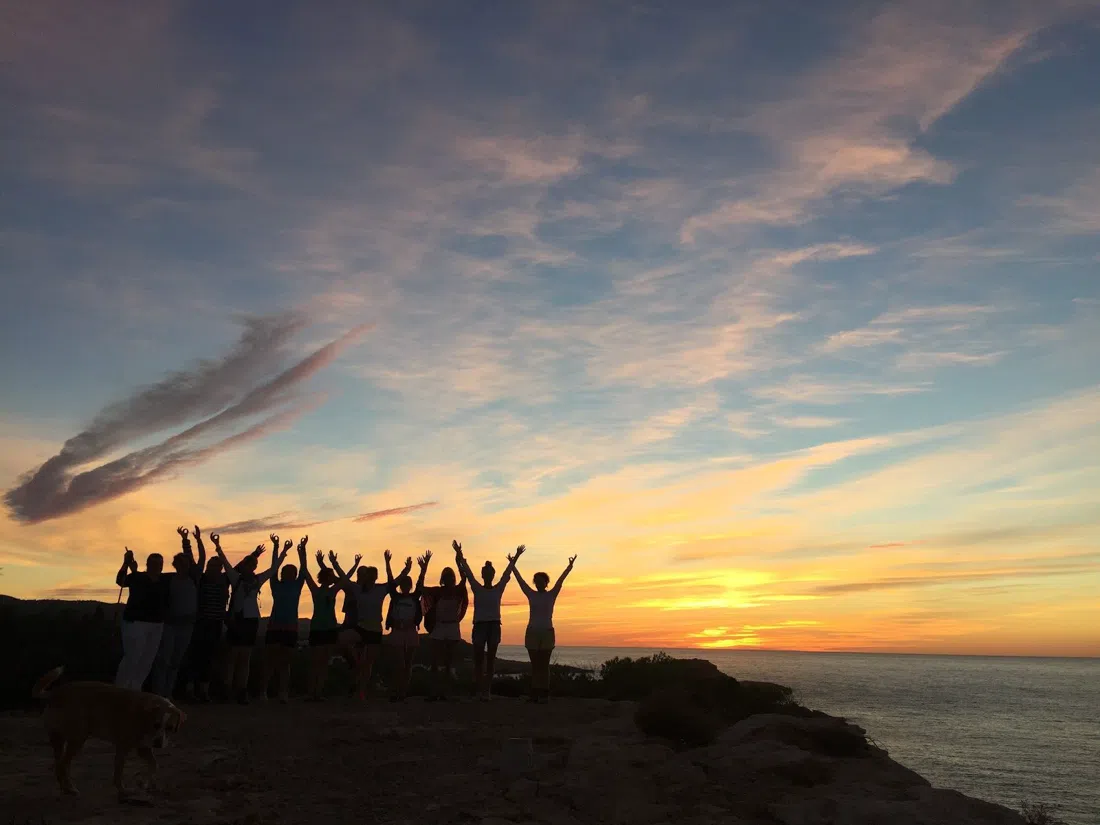
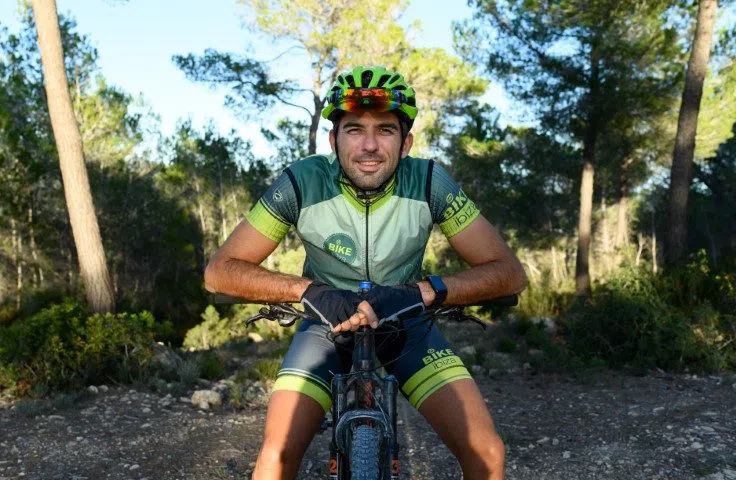
Bike Ibiza runs a private guided e-bike tour through the Salinas, priced per person in the €€–€€ range for a private group, pace and route tailored to mixed-ability riders — kids from 150cm are welcome. It covers considerably more ground than the walking tour in the same window of time, with the guide narrating salt and flamingo context throughout, which makes it the better option if your group has a wide age or fitness spread.
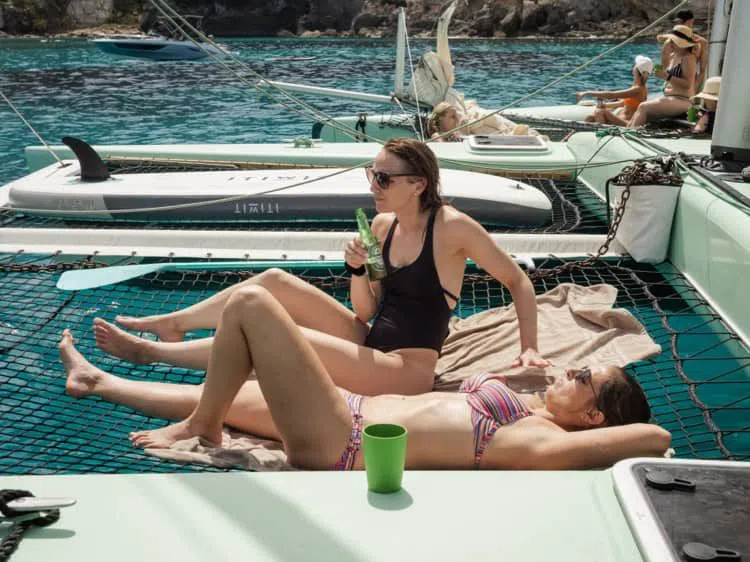
La Bella Verde takes it to the water: a private eco-catamaran charter for up to twelve people, departing from Ses Salines beach through summer to mid-October, priced at €€€€ for the full private boat (ask for the current rate). It's the only zero-emissions way to see the salt flats' coastline from offshore, and for a small private group — a family, a handful of friends — it's the most complete single afternoon on this list: the pans, the tower, the beach and the water, all from one seat.
Practical Information
Getting there: Ses Salines sits at the island's southern tip, roughly a 20–25 minute drive from Eivissa town, with a signed car park at the beach itself; there's no train, and buses run seasonally but a car or scooter gives you the flexibility to move between the flats, the beach, and Es Cavallet in one trip. Renting a bike works well too, especially if you're planning the e-bike route with Bike Ibiza anyway.
Cash and cards: Most of the chiringuitos and SAL de IBIZA's shop take cards, but it's worth carrying some cash for smaller stalls or informal set-ups near the car park, which can be card-shy in peak season.
Timing: Go early morning or the last two hours before sunset for the flats themselves — cooler, better light, more flamingo activity, and thinner crowds. Midday in July and August is genuinely hard on the salt pans, with no shade and reflected heat off the white surface. The beach clubs run the opposite way: lunch through late afternoon is when they're worth being at.
Budget: A day here can cost almost nothing — the park, the tower, the foundation, and Es Cavallet are all free — or run into the €€€€ range if you add a private charter and a chiringuito lunch. It scales cleanly either way, which is part of what makes it work for such a wide range of visitors.
If you're basing a trip around this corner of the island, start with the Ibiza guide for the wider picture, and check the Ibiza hotel search for stays within easy reach of the south — the closer you are to Ses Salines, the more likely you are to catch it at the quiet end of the day, which is when it's best.