
Before dawn breaks over the clubs the island is famous for, Ibiza's north is already awake on a different clock — jamón being sliced at a village bar, dew still sitting on a vegetable garden, a cove with no one in it at all. This is the island built on farms, fincas and a handful of pine-backed beaches the day-trip coaches haven't found, and it has almost nothing to do with the beat drops. That's the point.
Santa Gertrudis: the village where Ibiza actually eats
Santa Gertrudis de Fruitera is a small square ringed by plane trees, and it has quietly become the island's real food centre — not because anyone marketed it that way, but because three very different kitchens sit within a few minutes' walk of each other and all of them are still run the way they were twenty years ago.
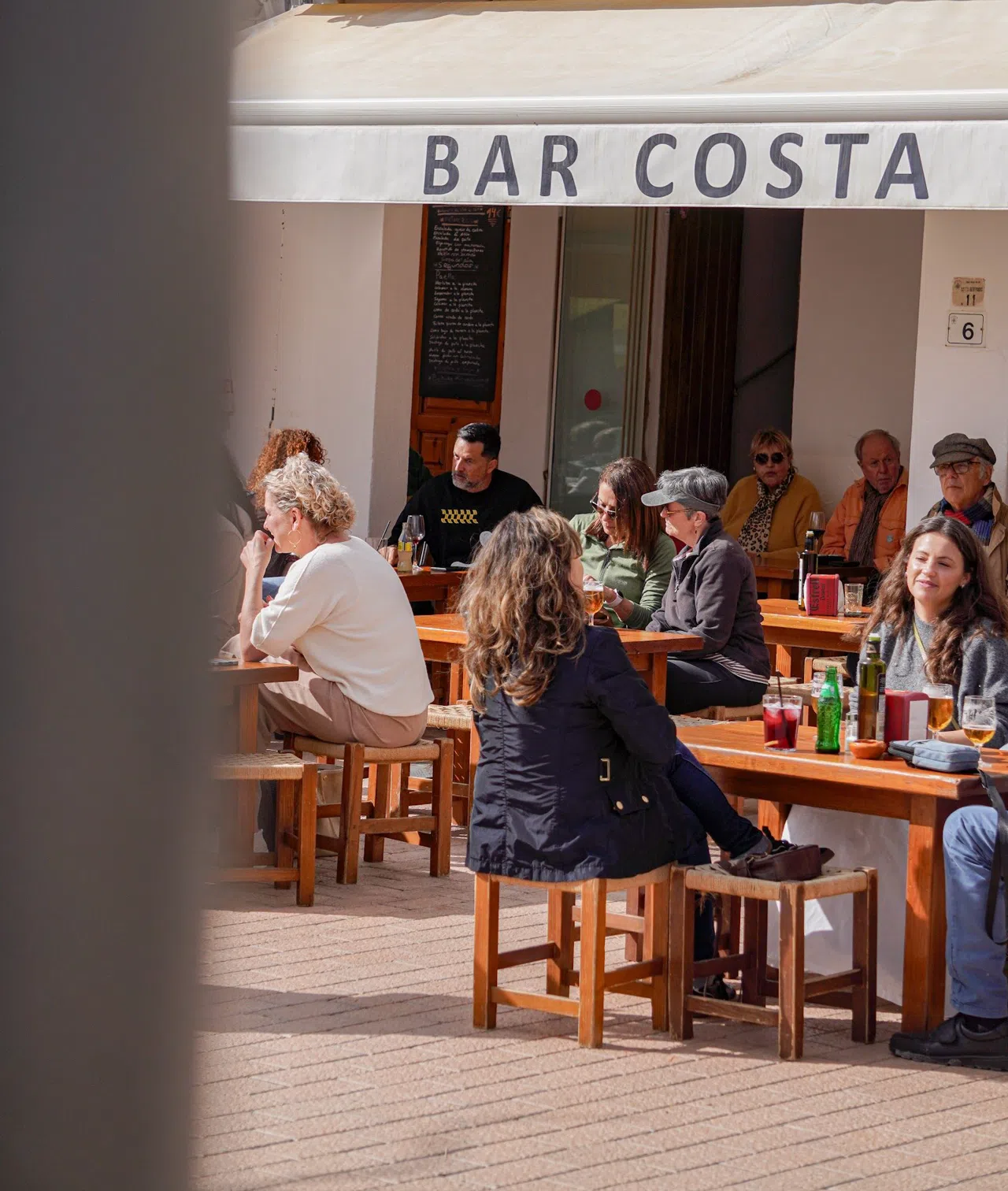
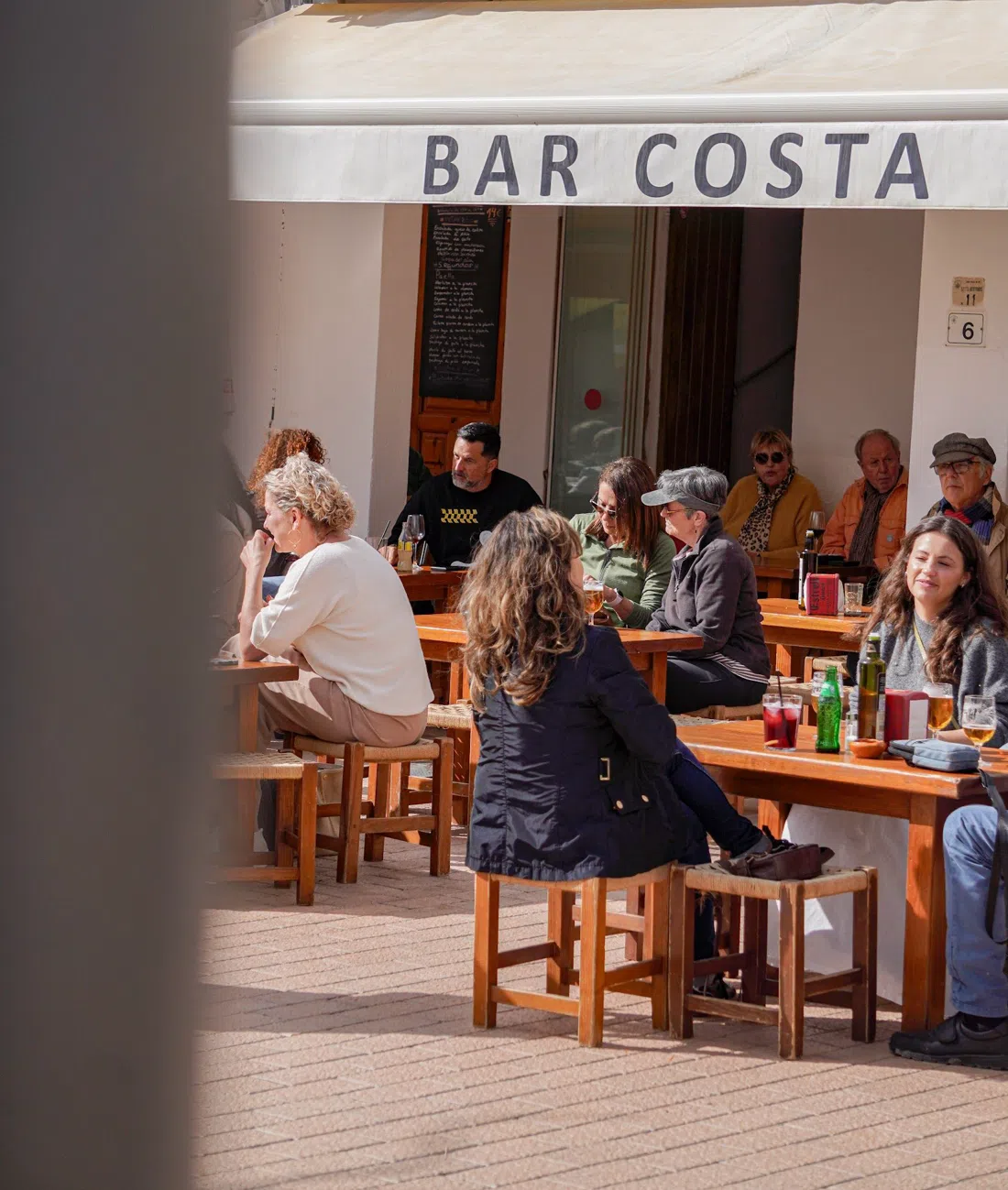
Bar Costa (Santa Gertrudis) is the anchor of the scene and has been unchanged for decades: hams hang from the ceiling, tables are shared and communal, and there's no reservation system — you walk in, find a space, and order jamón, cheese and bread by the board. It's informal enough for small groups but not set up for a party of twelve without patience. Expect €10-25 per person, and note it's closed all of March and on Tuesdays year-round.
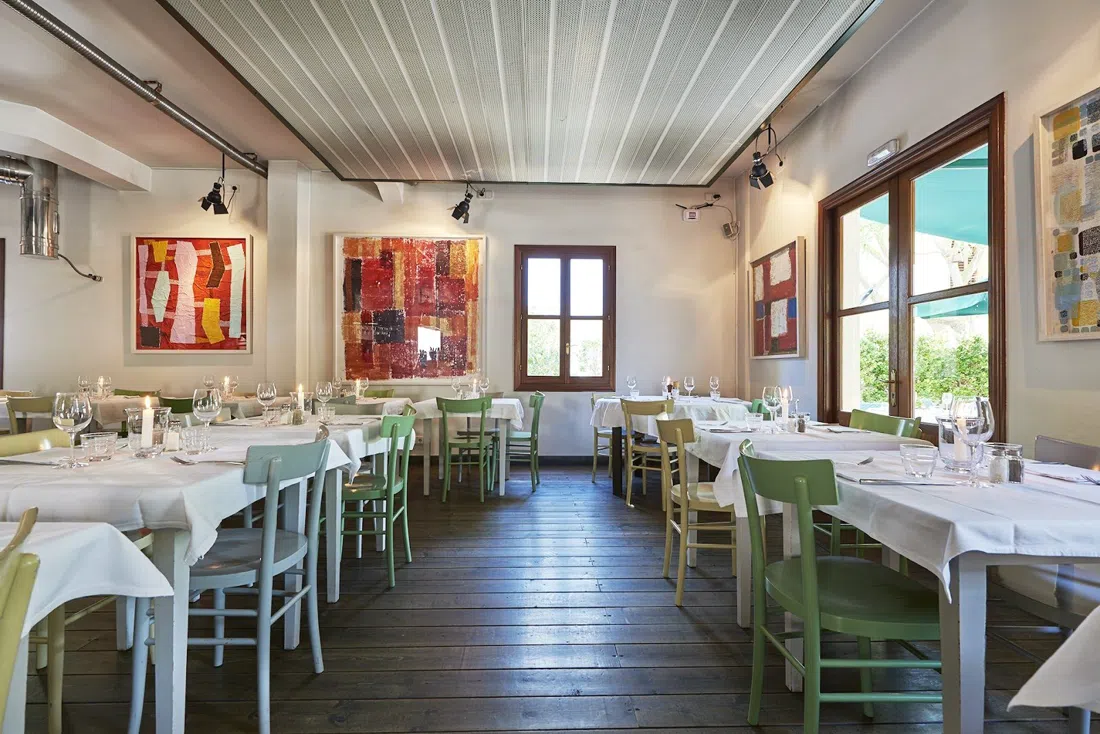
Macao Café (Santa Gertrudis), on the square itself, is the village's social hub — the good easy-lunch stop after wandering the shops, family-friendly, with terrace tables that staff will push together for groups. Dinner is a different story: book ahead, especially in high summer, or you'll be standing. Figure €25-40pp.
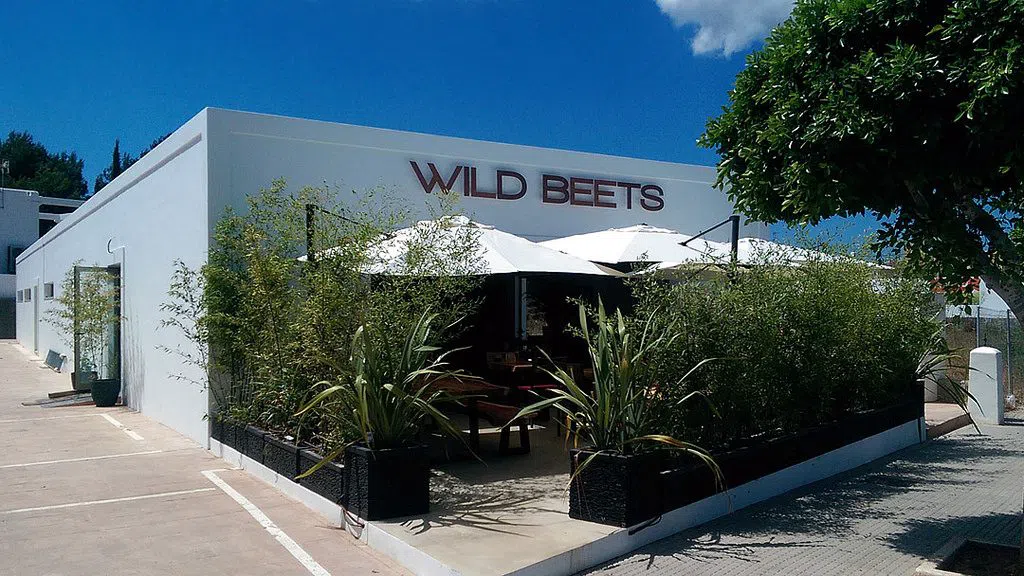
Wild Beets (Santa Gertrudis) is the cleaner, health-driven side of the same food scene — organic and plant-based, working with the same local produce as Bar Costa but in a different register entirely. It takes online bookings through resos and handles groups well. €20-30pp.
The three sit close enough together that a single afternoon in Santa Gertrudis — jamón at Costa, a browse of the square, lunch or a smoothie at Wild Beets — gives an honest cross-section of how the village actually eats, without a single overlap in what's on the plate.
The farms and fincas inland
A short drive from Santa Gertrudis, the island's interior turns into working farmland, and a cluster of restaurants have built their entire identity around what's grown on-site.
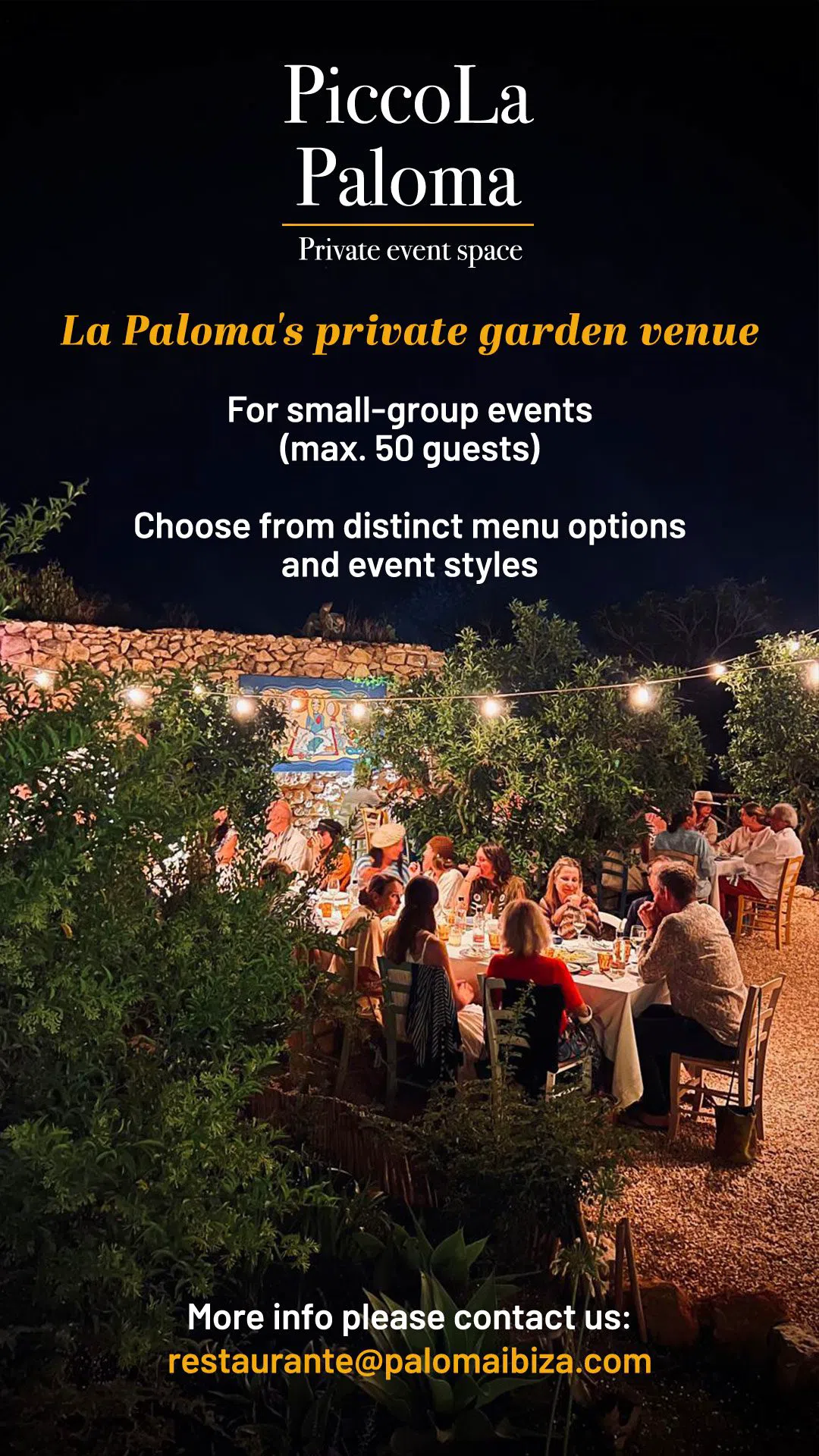
La Paloma (near Santa Gertrudis) is literally farm-to-table — it runs its own KM0 garden and bakes its own bread daily to supply the kitchen. It's family-run and takes groups, but book ahead for dinner, particularly on pasta night, which fills fast. €30-50pp.
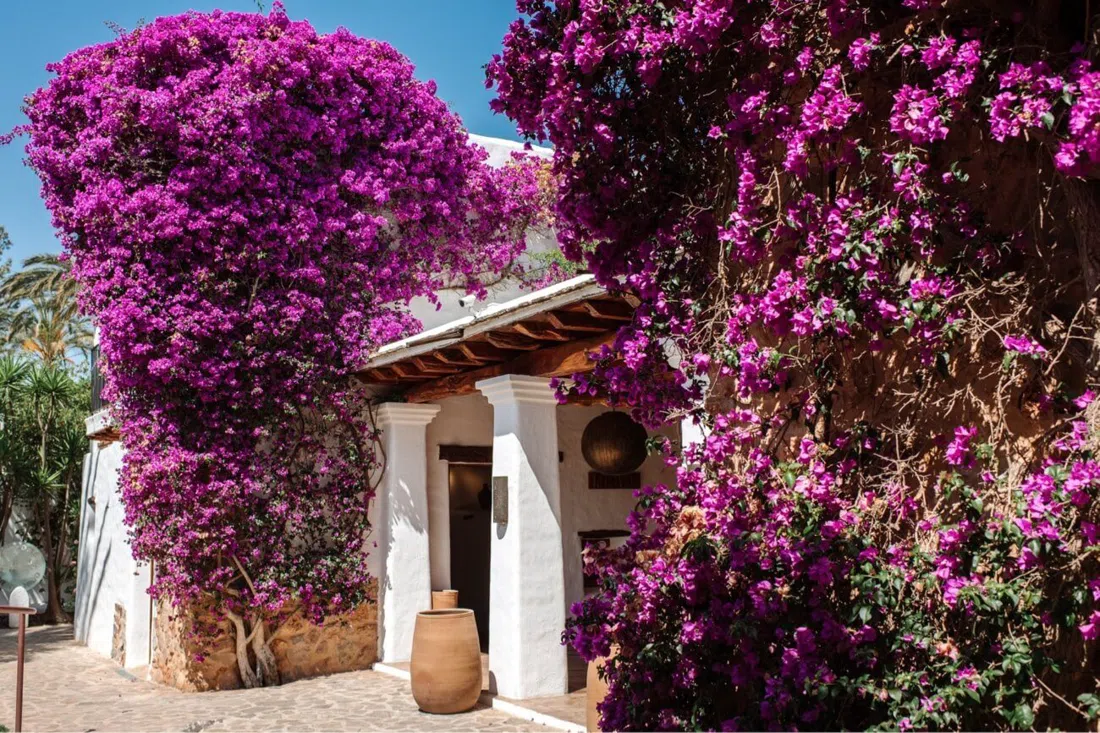
Atzaró Agroturismo Hotel (San Lorenzo road) is the most polished agroturismo experience on the island — a proper hotel and restaurant combination that takes groups for both lunch and events, with reservations recommended for the restaurant. Mains run €25-40, and rooms start from around €400 a night if you want to stay over rather than just eat. It reopened for the 2026 season on 14 March, so it's worth confirming it's still open for the dates you're planning before you go — check the Ibiza hotel search for current availability.
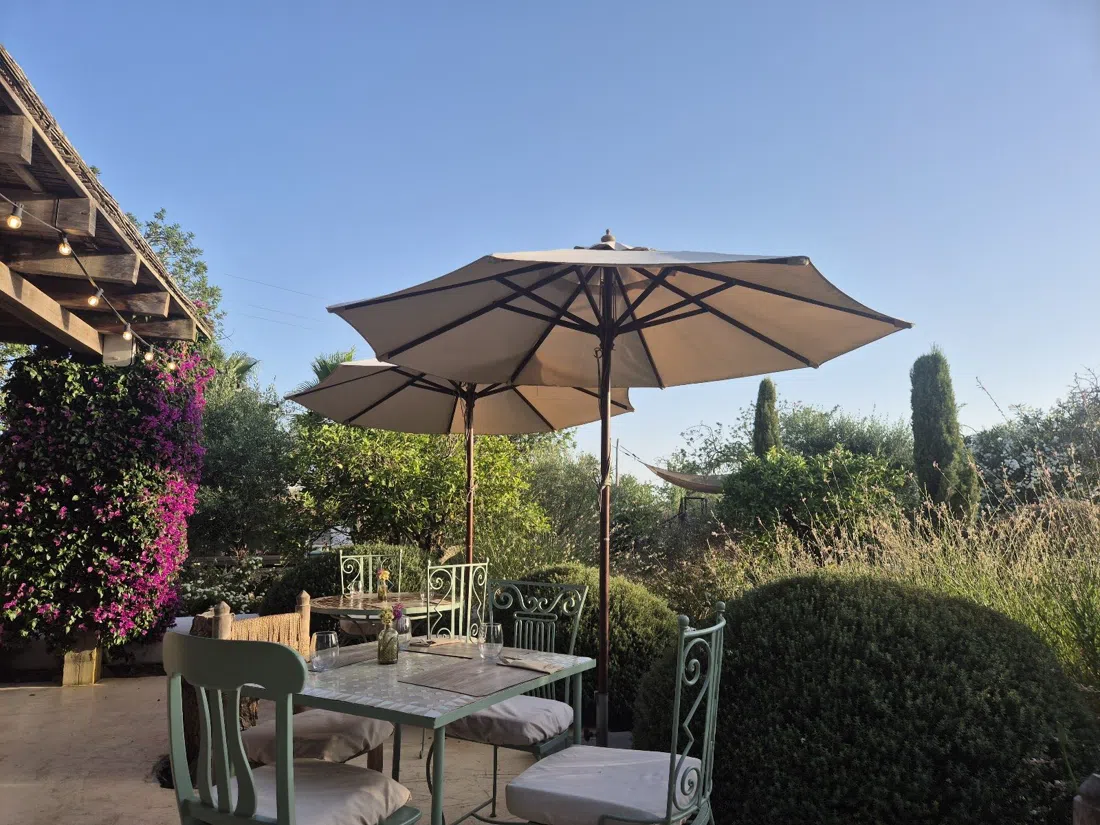
Aubergine by Atzaró (same finca, San Lorenzo) is a separate restaurant from the hotel itself — same group, same vegetable garden, but its own kitchen and multiple garden seating areas that make it genuinely good for groups. €35-55pp.
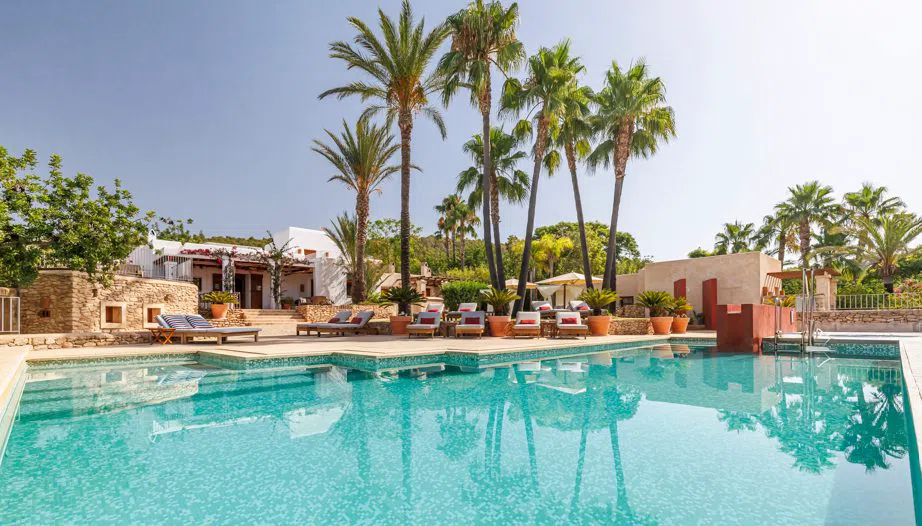
Can Lluc (San Rafael) is one of Ibiza's first agroturismo properties, opened in 2003 after a four-year restoration, and it still feels genuinely rural rather than resort-adjacent. The restaurant is open to non-guests and takes groups and events; rooms start around €250 a night, dinner runs €30-50pp.
Ses Escoles (San Mateo), also known as the Oleoteca, is Ibiza's first olive grove with its own gastronomic restaurant and shop attached — it's been Repsol-guide listed since 2022. It takes groups and works well for combining an olive-oil tasting with a proper sit-down meal, €30-45pp.
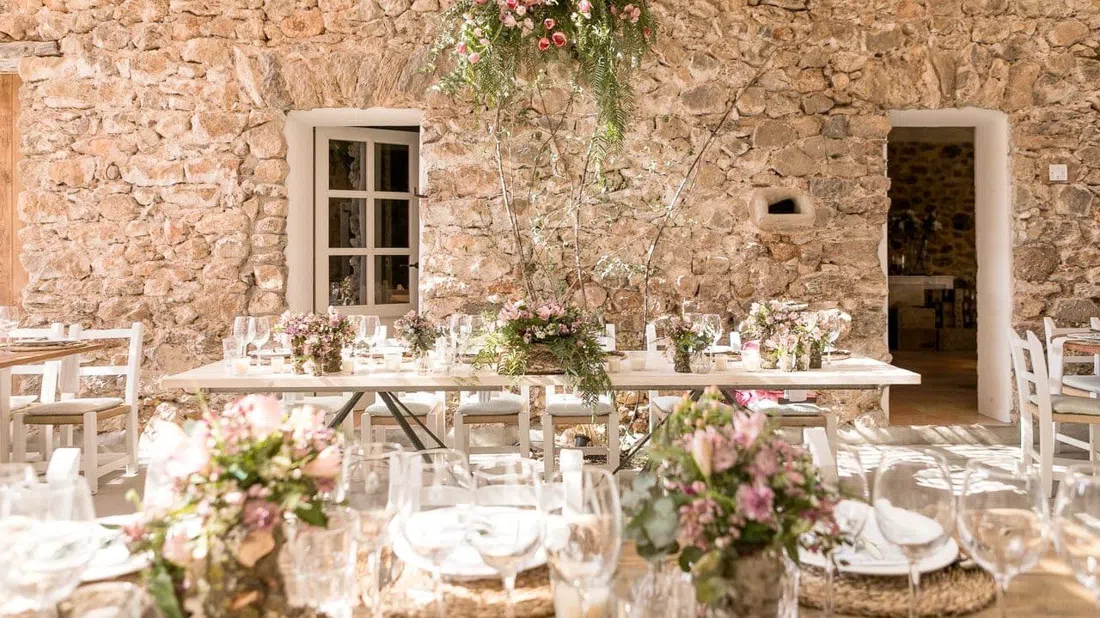
Between them, these five places make the case that Ibiza's most interesting cooking right now isn't happening in a beach club — it's happening on working farms, most of them within a fifteen-minute drive of Santa Gertrudis.
The north coast's empty coves
This is where the island's other reputation falls away completely. The north coast, past Sant Joan, is a run of pine-backed coves that stay genuinely quiet even in August, if you know which ones and when to arrive.
Cala d'en Serra (near Portinatx) is the closest thing on the island to a genuinely empty cove — there's no venue to book and nothing to buy most of the year, so bring water, food and shade yourself. Small groups are fine, but parking is very limited, so arrive early. It's free, and a seasonal snack shack appears only at the height of August before being dismantled again.
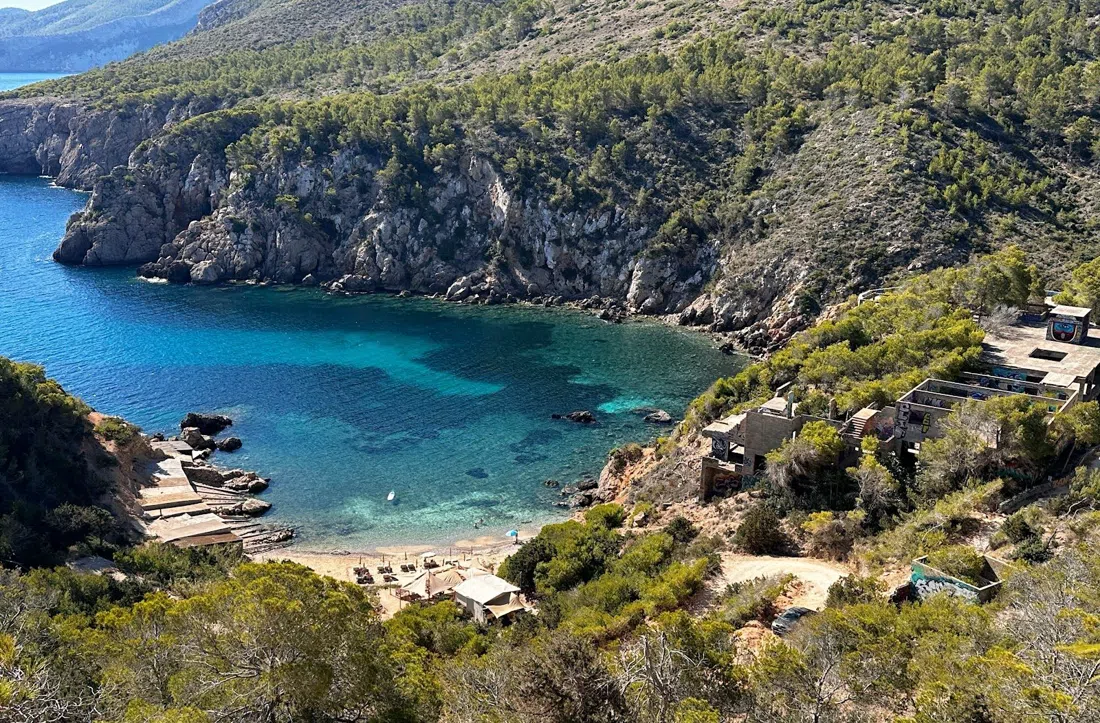
Cala Xarraca (Port de Sant Miquel area) has one on-site chiringuito, fine for groups but genuinely busy by midday — the pull here is the mud baths, and the trick is going early, before the day-trip coaches arrive. Free entry, with restaurant mains €15-30.
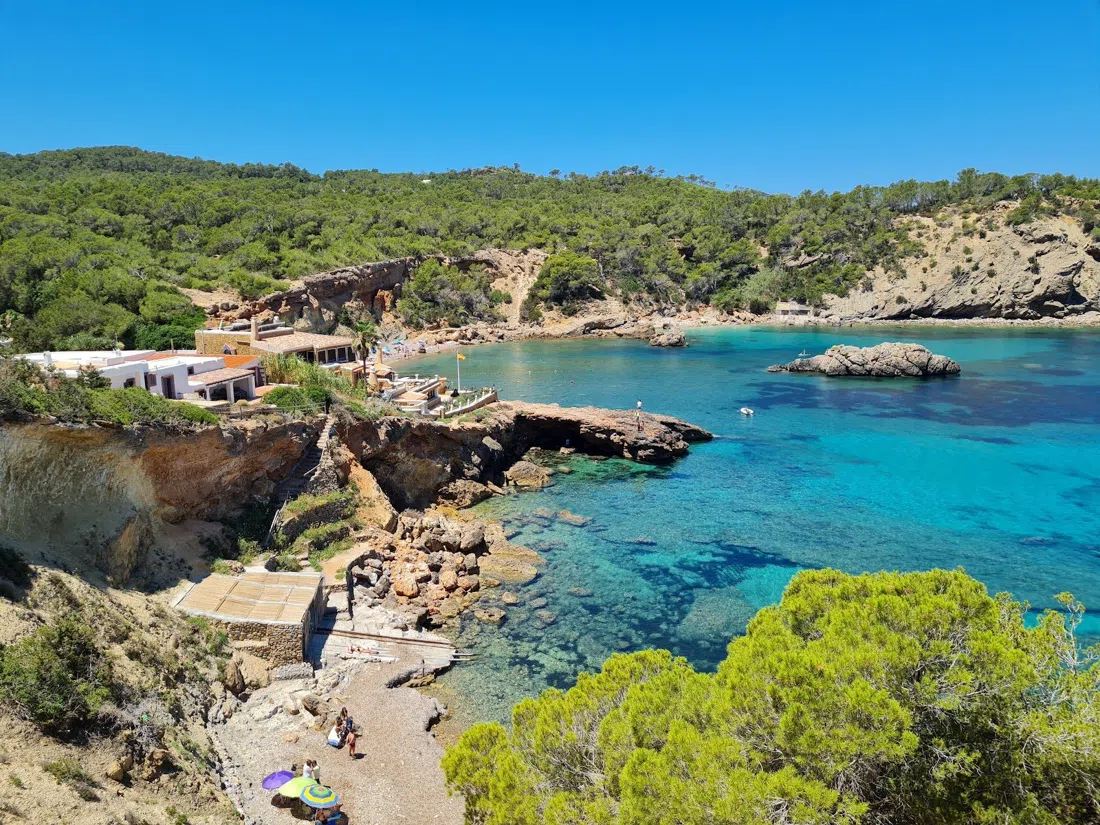
S'Illot des Renclí (near Cala Xarraca), a cove restaurant most tourists never find, has been family-run since 1983 and serves real bullit de peix and fresh fish. It takes groups but book ahead by phone — there's no walk-up system here. €35-55pp.
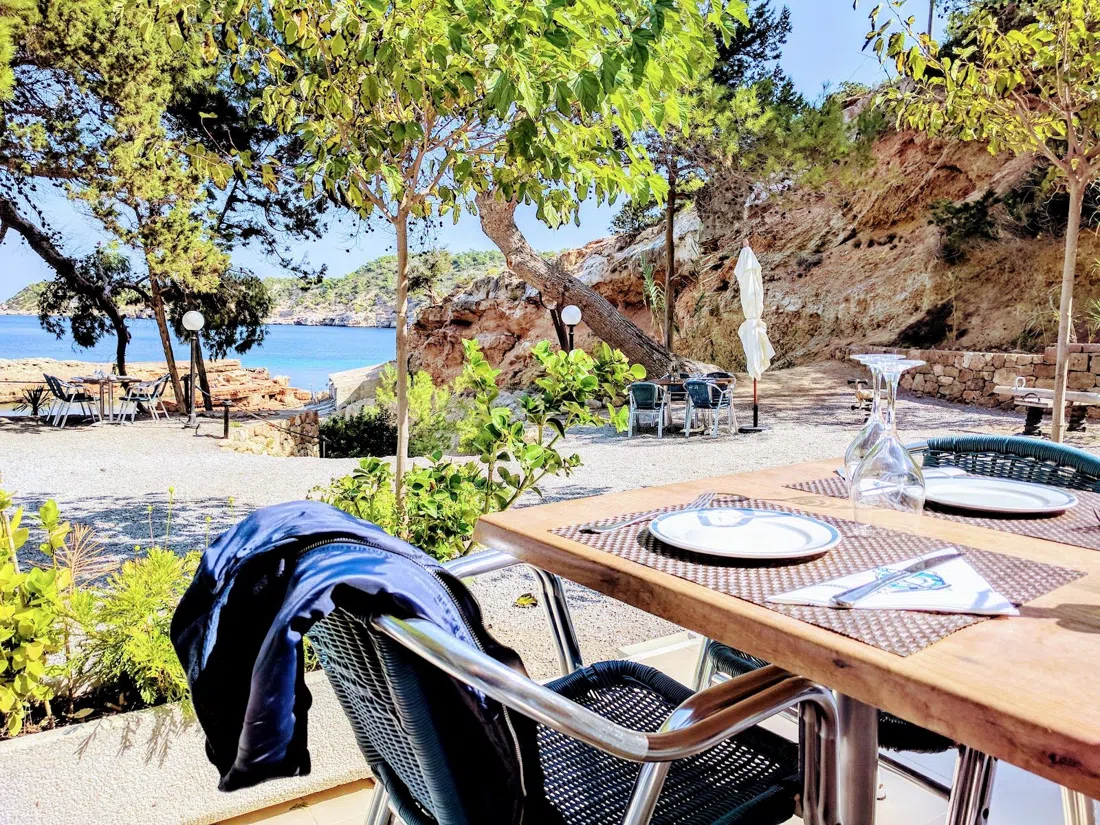
Portinatx – Playa Porto (Portinatx) is the quietest of Portinatx's three coves, calm even at the height of August — a public beach with no booking needed and no cost.
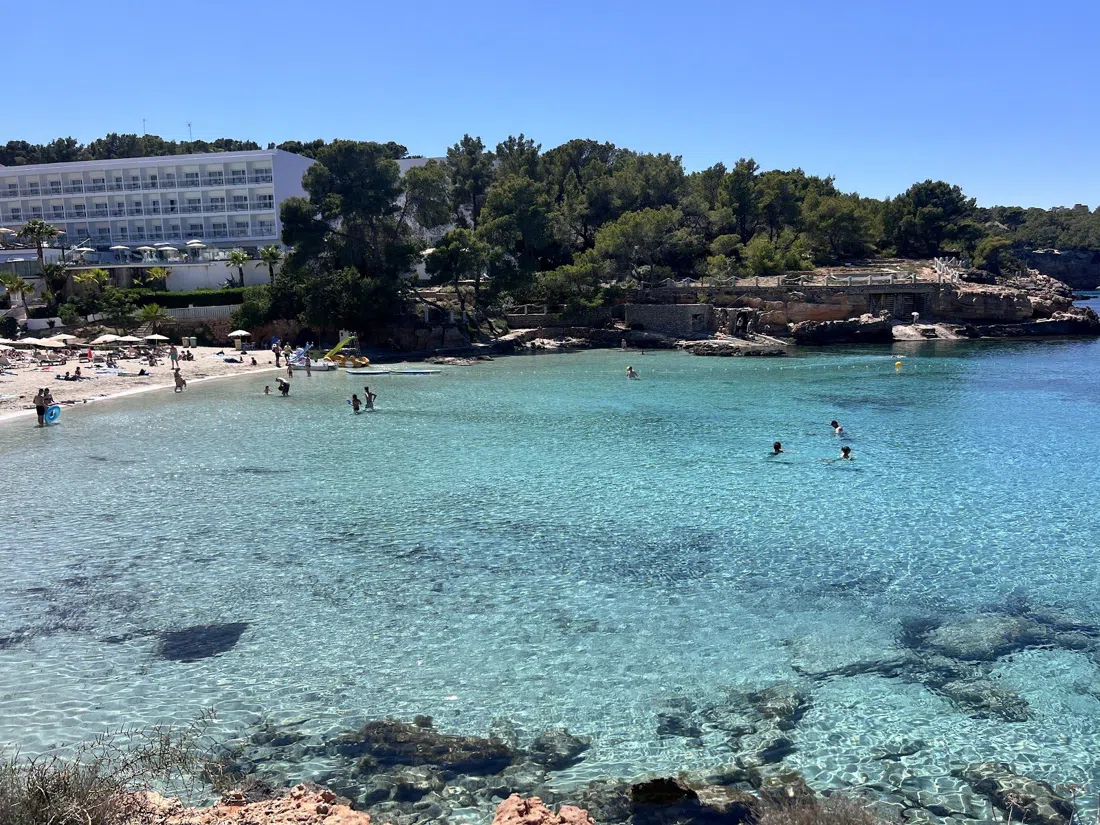
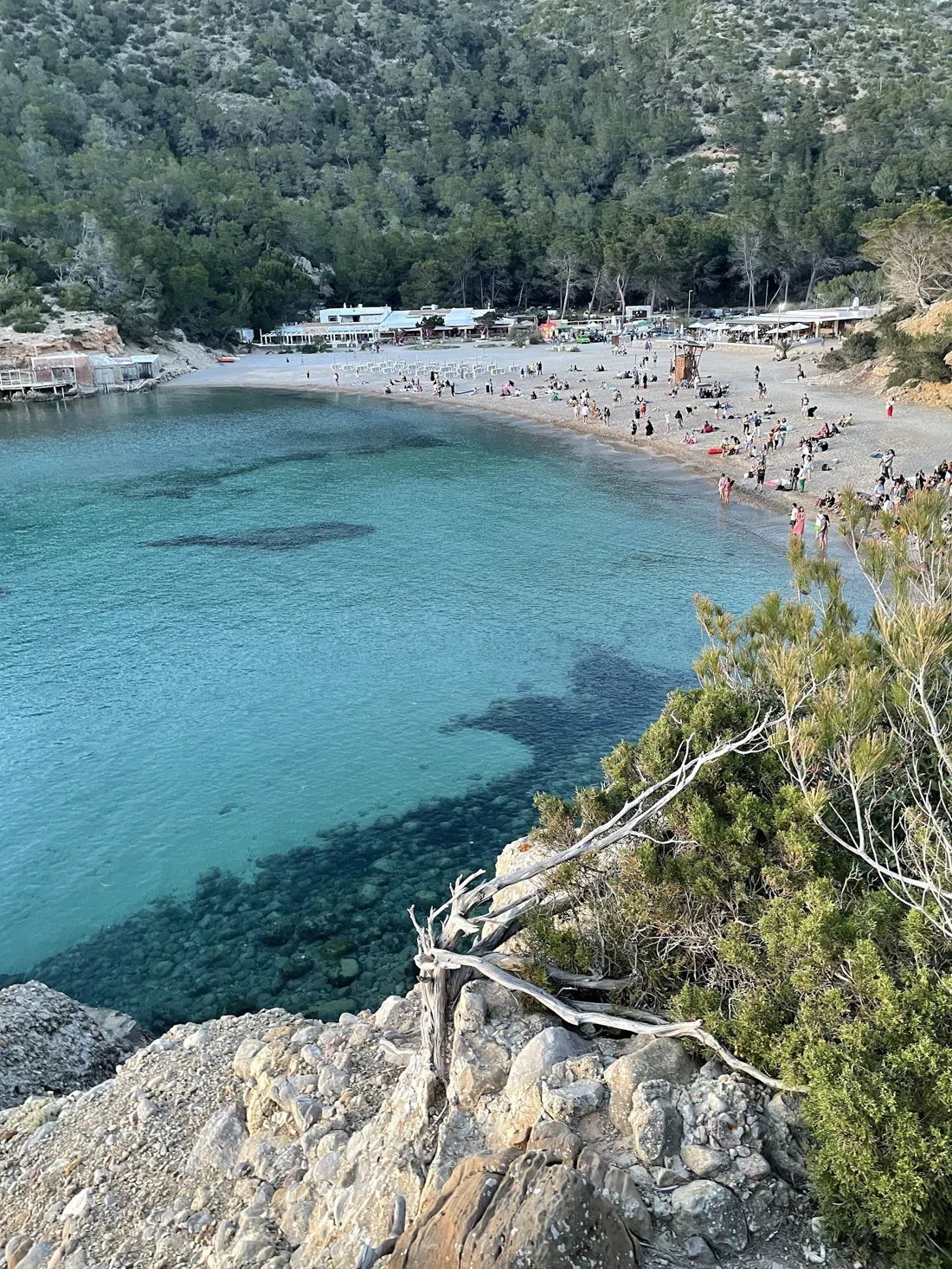
Cala Benirrás (San Miguel/San Juan coast), a public beach, is the one exception to the north's quiet reputation: every Sunday at sunset it draws a real crowd for a hundred-strong drum circle that's become part of island folklore. Free entry, and on any other day of the week it's silent and near-empty — visit midweek if the quiet-north angle is what you're after, and go on Sunday evening if you want to see the island's other personality in full swing.
Sant Carles: the island's other personality, on foot
If Santa Gertrudis is the polished face of rural Ibiza, Sant Carles de Peralta is the proof of where it came from.
Las Dalias (Sant Carles de Peralta) has been running since 1985 and is physical evidence of the island's hippy-era history — an open-air market, no booking needed, easy to wander through as a group. Entry is free. The core Saturday market runs year-round; the Sunday and night markets are seasonal, so confirm the live 2026 calendar before building a day around them.

Bar Anita, also known as Ca n'Anneta (Sant Carles de Peralta), is reputed to be the original hippy-era bar on the island, open since the 1960s — a communal counter and shared tables, no reservations, walk in and find a seat. It's the unpretentious counterpoint to everything polished about Santa Gertrudis, and at €5-15pp it's the cheapest stop in this entire guide.
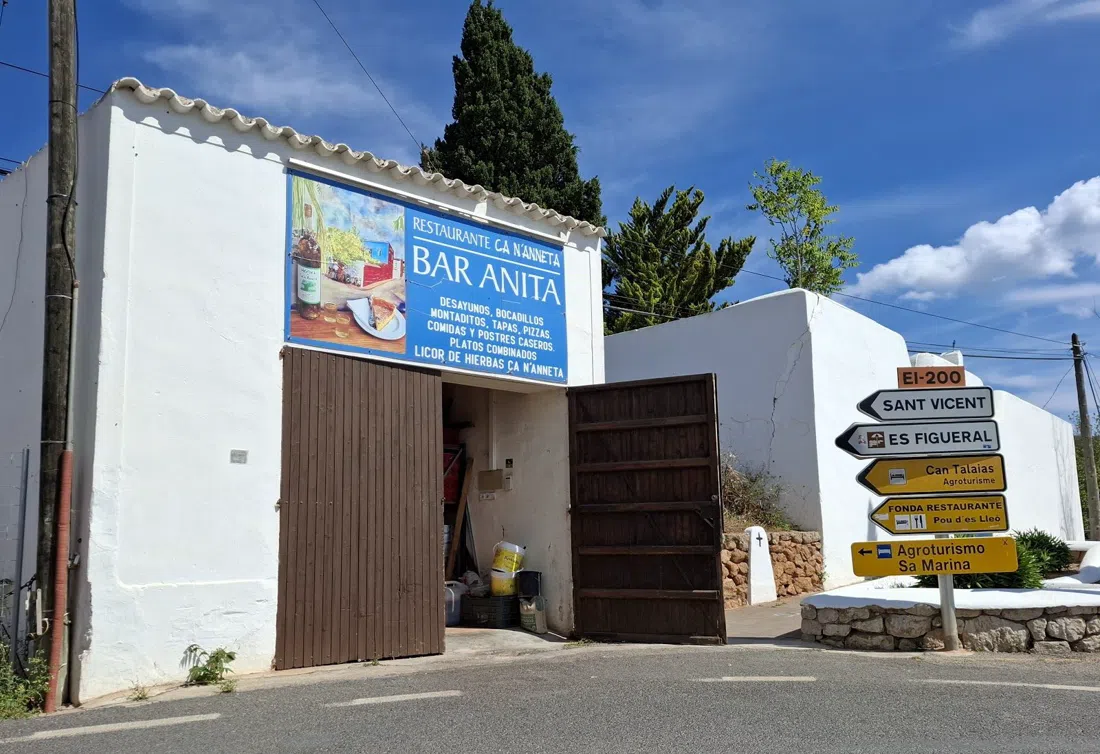
Together they make the argument at the heart of this piece: Ibiza has always had two personalities running in parallel, and the market-and-bar tradition of Sant Carles is exactly as old, and exactly as real, as the club scene that gets all the attention.
Getting there, when to go, what to budget
Transport. The north has no meaningful public transport network worth relying on — a rental car is the only realistic way to string together a village lunch, a finca dinner and a cove in the same day. Roads into the coves narrow fast, so budget extra time for parking, especially at Cala d'en Serra.
Cash. Village bars like Bar Costa and Bar Anita, and smaller coastal chiringuitos, are the kind of places where cash still smooths things over — it's worth carrying some even where cards are accepted.
Timing. Go early for the coves — Cala Xarraca and Cala d'en Serra both fill by midday in summer — and go midweek if you want Cala Benirrás without the crowd. For the restaurants, book ahead for dinner across the board in July and August; lunch is far more forgiving.
Budget. A day built around this guide runs anywhere from a €10-15 jamón board at Bar Costa to a €400-a-night stay at Atzaró — the range is the point. You can eat and swim your way through the island's quiet north on a modest budget, or turn it into the whole trip. For accommodation near any of these villages, the Ibiza guide has the wider picture of where to base yourself.