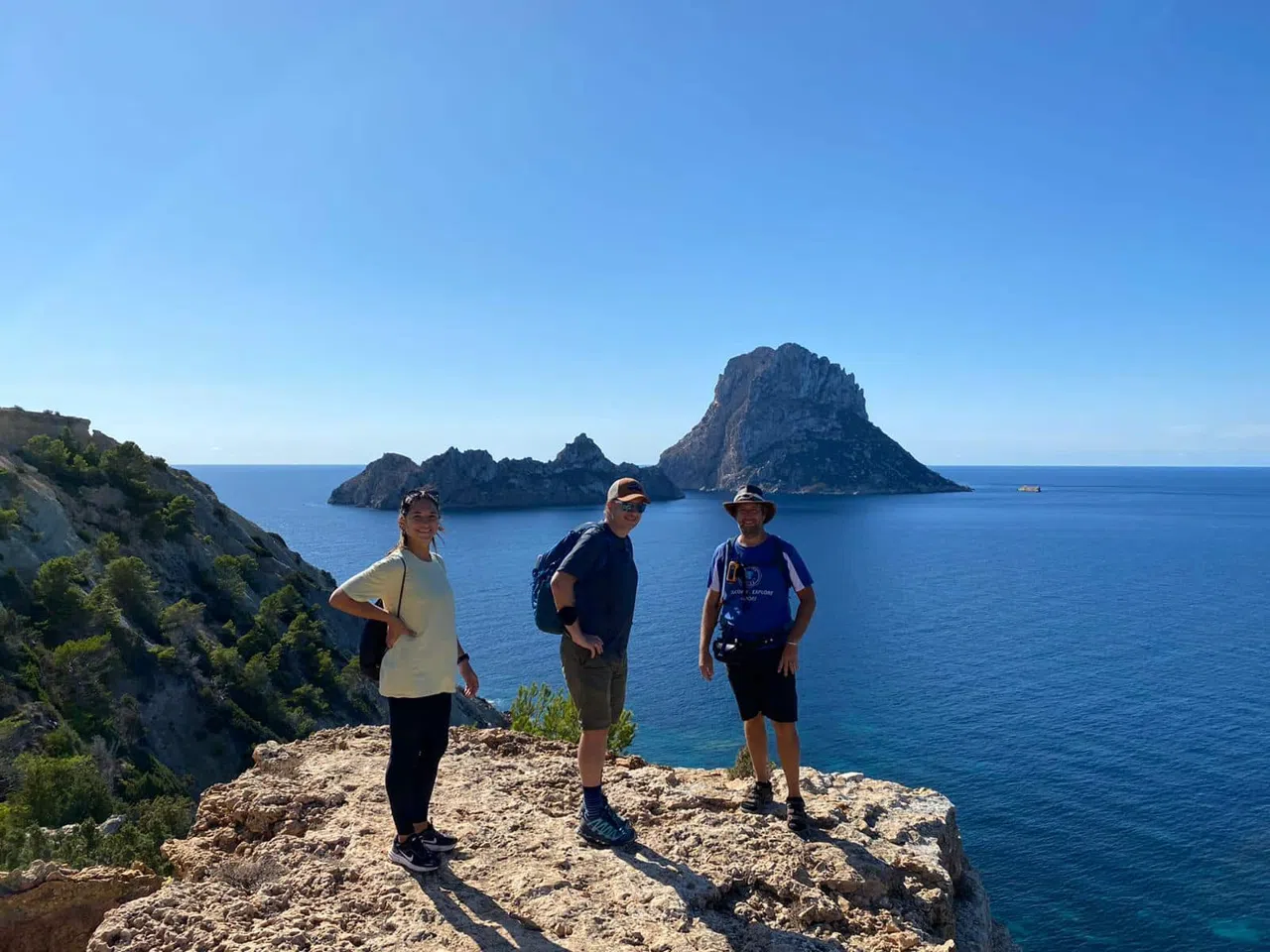

The church plaza in Sant Josep de sa Talaia is quiet at eight in the morning, and the lane behind it climbs straight into pine. Ten minutes up, the island's noise has gone and what is left is resin in the warming air, rosemary bruised by your own boots, and the dry tick of needles settling on the track. This is the forest the Greeks named the islands after, the Pitiusas, the pine islands, and it is still worked: in autumn you will pass someone with a basket and a flat knife, reading the ground under the trees instead of the view above them.
Foraging the interior is a half-day habit rather than a single attraction. It splits into four things that fit together in one trip: a hill to understand the landscape from, a guide who can name the plants, a workshop where you cut and bottle something, and a farm or a farmhouse that shows what the forest was used for. All of it sits inland, most of it costs under €40, and almost none of it is busy.
Start on the hill so the rest makes sense
Sa Talaia, properly Sa Talaiassa, rises behind the village of Sant Josep de sa Talaia and is the island's highest point at 475 m. The official route is 2.4 km and about an hour and a quarter up, easy-to-moderate with one genuinely steep pitch near the top, and it starts from the church plaza: no booking, no gate, no group limit, free. The first stretch passes the last houses and a few terraces, then the pine closes over and stays closed almost to the summit. You walk through the pine belt for an hour and then stand above it and see it as a dark green blanket over the middle of Ibiza, with the coast reduced to a thin rim. No other walk shows you the belt so plainly.
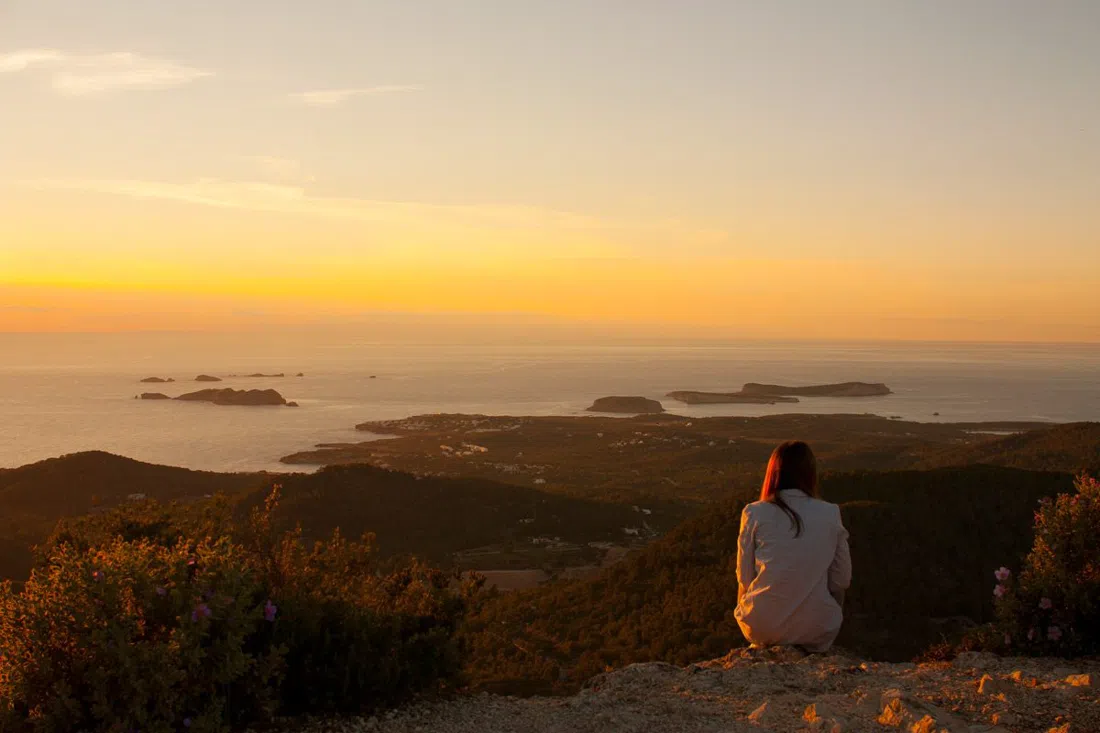
Look down rather than out. After the first autumn rains, the sandy ground under these pines is where islanders still hunt esclata-sangs, the saffron milk caps that are the island's one serious wild-food obsession. On a casual walk, treat them as someone else's harvest. The etiquette around known patches is real, and the plants and fungi you actually want to pick are the ones a guide points at and says yes to. Cyclists can make a morning of it: the road up from the village is a steady grind rather than a wall, and an e-bike gets you up the approach before the heat, leaving the final track on foot.
Walks where someone names what you are standing in
Camino Verde Ibiza runs the island's only dedicated wild-food-and-medicine walk, with scheduled departures from Sant Miquel de Balansat in the north. Tim Spankie's 'Herbs of Ibiza' walks last about two and a half hours and cost roughly €40 per adult, around €28 reduced, with private walks, land visits and retreat work on request. The ideal group is six to twelve, which tells you the format: close enough to crouch over the same plant. Every walker leaves with a written list of what was found and what it is used for. Dated walks are published into 2026, including late January and late February departures from Sant Miquel. If you only do one guided thing inland, do this.
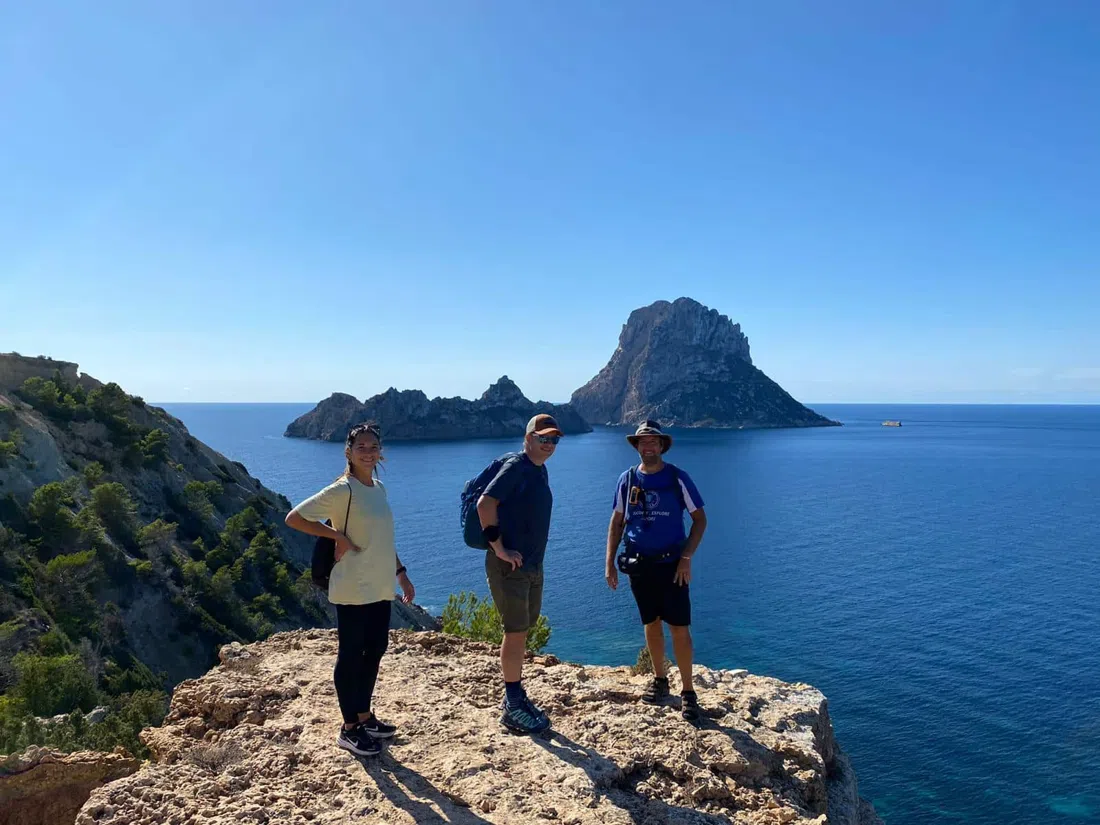
Ibiza Outdoors, the outfit formerly trading as Walking Ibiza, has been guiding the island since 2010 and is the cheapest legal way into the interior with a licensed guide. Scheduled group walks start from €15 per person, with two a week on rotating routes; the hierbas walk paired with a liqueur workshop and the private hikes cost more. Toby Clarke's team runs to around fifteen guides in season, which matters if you are a party of twenty and want to be split into real small groups rather than herded as one. Say explicitly that you want the inland routes. The coastal and cliff walks are the better-known product, and they are not the pine belt.
The Other Face Ibiza is the pick if you want the ecology explained rather than the view framed. Marc and Donovan's two-man operation keeps groups deliberately small and private, goes where the larger walking groups do not, and talks about flora and birdlife as the substance of the walk rather than as filler between photo stops. Pricing is on request and sits in normal private-guide territory; booking is direct through their own system. They also organise trail and beach clean-ups, which works for a corporate or school group with people of mixed fitness in it.
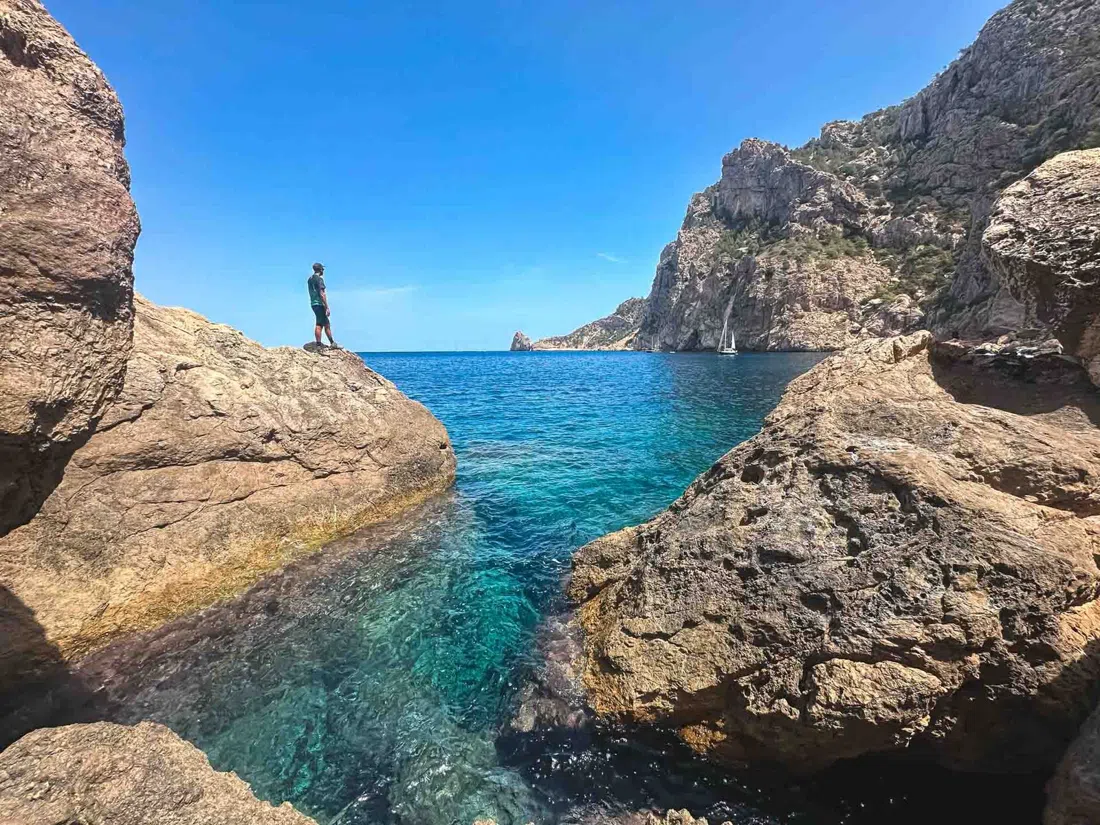
Discover Ibiza Hikes is private-first and priced that way: panoramic and half-day routes run roughly €65 to €70 per person, quoted for one to three people with a per-head supplement above that, so a group of eight is possible but no longer cheap. Routes are customisable and their published map covers all four corners of the island, which makes them a sensible booking for Sa Talaia and the inland tracks around it with a guide carrying the water and the plant knowledge. Reviews are consistently strong, 4.9 across around thirty-eight, with one 2025 complaint about a long wait. Confirm the meeting point and the pickup time in writing and you have removed the only recurring gripe.
Cut it, bottle it, wait three months
Fluxà Ibiza runs its artisanal hierbas workshop in its own botanical garden, and it is the most hands-on, least gimmicky foraging activity on the island. Joan Tur takes you through the eighteen plants that make hierbas ibicencas, the island's anise-based herb liqueur. You cut them yourself, bottle them with the anise and seal the bottle to mature for three months at home. It costs about €25 per person, €24 to the workshop and €1 donated. The workshop room seats thirty and sessions can run in the garden or at your villa, so this is the one activity here that absorbs a big group without becoming a lecture. Pack for it: you are leaving with a sealed glass bottle that needs checked baggage and a dark cupboard until roughly the new year.

Sa Terra Ibiza holds nature-first craft workshops in villages across the island (botanical pressing and herbarium work, hierbas, botanical composition) at €35 to €50 per workshop with materials and a take-home piece included. Dates run through autumn 2026, which makes it one of the few genuinely off-season options, and you can commission your own session choosing the place, date and time, with the host going free when six or more attend. It is indoor, gentle and unbothered by weather, so treat it as the companion to a walk rather than a substitute: forage in the morning, press and label in the afternoon.
The interior as a working system
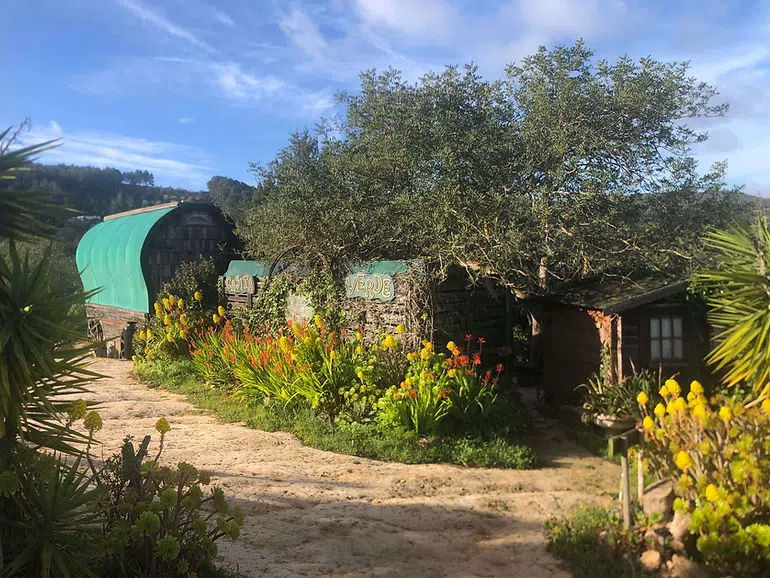
Casita Verde, an ecology centre in its own valley, holds thirty years of practical Ibizan ecology in one place: composting, greywater, native planting and the island's seed-saving habit. It is the only stop that explains the interior as a system that has to keep working rather than a landscape to admire. Entry is free to donation. The Sunday open day has an 11:00 tour and a 14:00 vegan tasting, with the lunch included once you take a one-off €10 membership. From October to May they also open on Monday, Wednesday and Thursday mornings by reservation at least three days ahead, which is the better route for a booked group and avoids the Sunday transport problem described below.
Finca Ecológica Can Musón is the one farm on the island genuinely organised for visitors, with native breeds, a farm school and the crops the interior actually grows rather than a display garden. It opens daily from 9:00 to 16:00 in winter and until 19:00 from mid-May, with three tiers: €9 self-guided, €17 with a tasting, €25 guided with a tasting, under-2s free. Reviewers have noticed the price creeping up and they are right: the self-guided ticket is a walk around a farm. If you go, take the guided-with-tasting tier, where someone explains the almonds, the carob and the goats, and the thing has some content in it.

A roof made of the forest you just walked
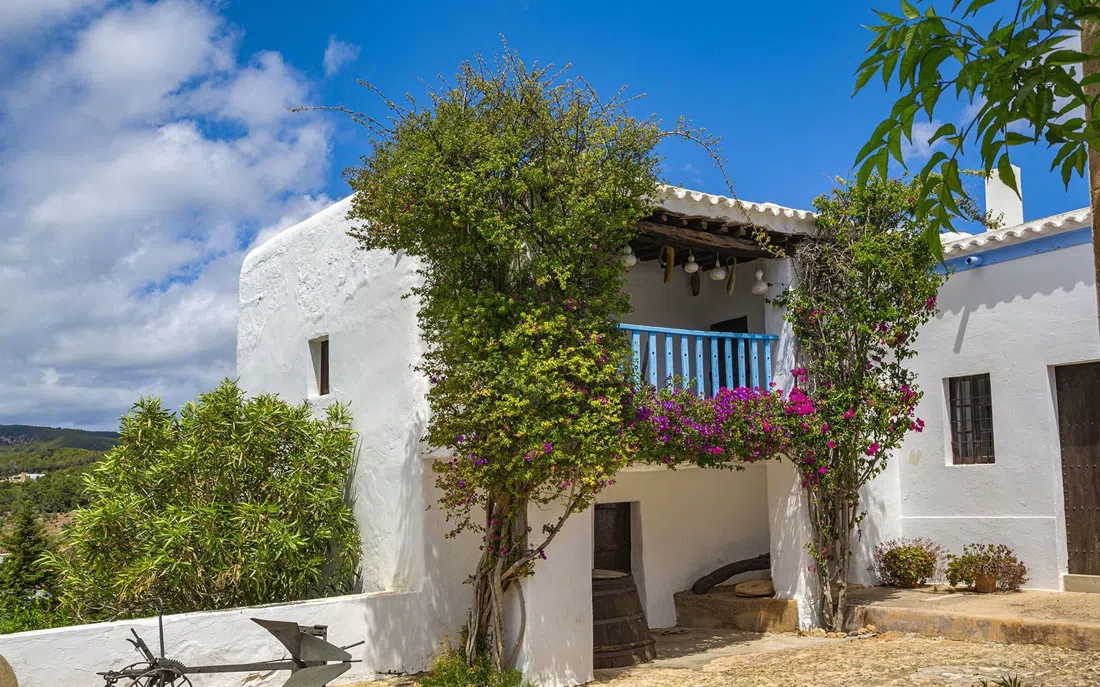
Es Trull de ca n'Andreu is a municipal ethnographic house museum in Sant Carles de Peralta in the eastern interior, documented since 1730 and protected as a BIC. Entry is free. It opens Tuesday and Thursday 15:30 to 18:30 and Wednesday, Friday and Saturday 10:00 to 13:00, closed Sundays, Mondays and public holidays, and a phone call ahead of a group visit lets them staff it properly. Go after the walk, not before. The sabina beams holding up the roof are the same twisted, rot-resistant, slow-growing wood you have spent the morning stepping around in the forest, cut and dragged and mortised into a working house with an oil press, a bedroom and a store. It is the cheapest and best context stop on the whole inland route, and where the pine belt stops being scenery.
Which of these suits your group
Couples and solo walkers get the most out of Camino Verde and Fluxà, where small numbers mean you actually handle the plants. Large parties should start with Ibiza Outdoors, because fifteen guides in season is the only real capacity on the island, then add the Fluxà workshop room or a commissioned Sa Terra session. Both are built for numbers. Families do best at Can Musón, with the lower slopes of Sa Talaia as a short walk rather than a summit attempt. Corporate groups with mixed fitness are better served by The Other Face's clean-ups than by a hike nobody finishes.
Be realistic about access. None of these walks are suitable for limited mobility: the Sa Talaia route is loose stone with a steep final pitch, and the guided inland routes are rough track. Es Trull de ca n'Andreu is a 1730 farmhouse with thresholds and steps, so call before travelling. Nothing inland runs on a tourist-season rhythm either. Scheduled group walks are twice a week, the museum shuts five half-days out of seven, and the dedicated herb walks publish specific dates. Book in the order of what is scarce, which means the walk first and the farm last.
Planning the half day
A hire car is the honest answer for the interior. Inland buses exist but run to a village timetable rather than a visitor one, and Sunday service is thinnest exactly when Casita Verde holds its open day; if you want that, drive or book a taxi both ways with a return time agreed. On two wheels the interior is the best cycling on the island: quiet asphalt, steady gradients, pine shade for much of it. For a base, inland agroturismo puts you inside the forest and town puts you near the airport and the ferries; compare both on the Ibiza hotel search before you fix the route, and see the Ibiza guide for what to pair the day with.
Carry €60 to €80 in small notes. The museum is free, Casita Verde works on donations plus the €10 membership, Fluxà takes €25 including its €1 donation, and farm tickets are low-value. None of it wants a card terminal chased down a dirt lane.
Late September to November, after the first rains, is the best window: the hills green up, the esclata-sangs appear, and the heat is gone. Spring gives you the herbs in flower, which is when the hierbas workshops make most sense. In summer, start walking by 08:30 and be off the hill by 11:00. Winter is quiet and open, with Can Musón, Sa Terra and the October-to-May weekday mornings at Casita Verde all running.
A frugal day for two comes to about €110: two scheduled group walks from €15 each, two workshop places at €25, and one €17 farm tasting, plus fuel. A fuller version (a €40 herb walk each, a €25 guided farm tasting each and the €25 workshop) lands around €180 for two and still costs less than a sunbed on the coast. Ask every operator which language the walk runs in and get the meeting point as coordinates, not a village name. The interior has a lot of unmarked junctions.