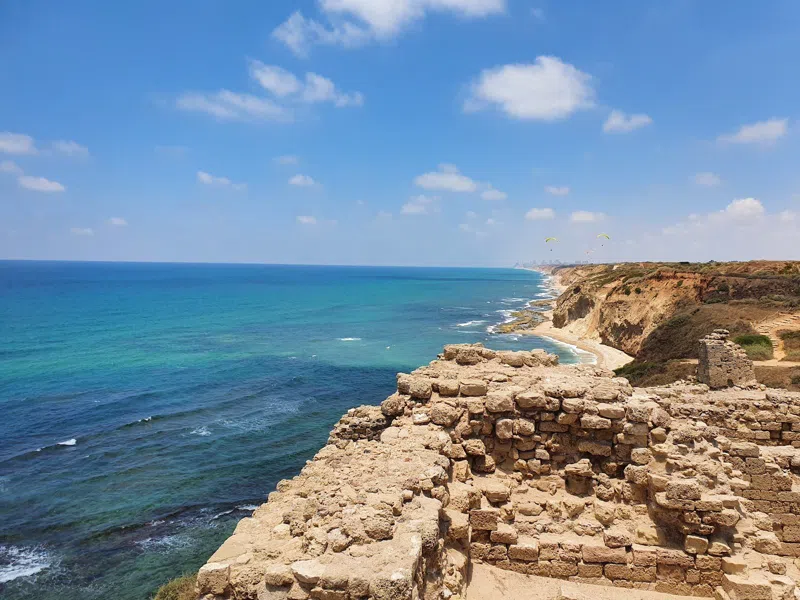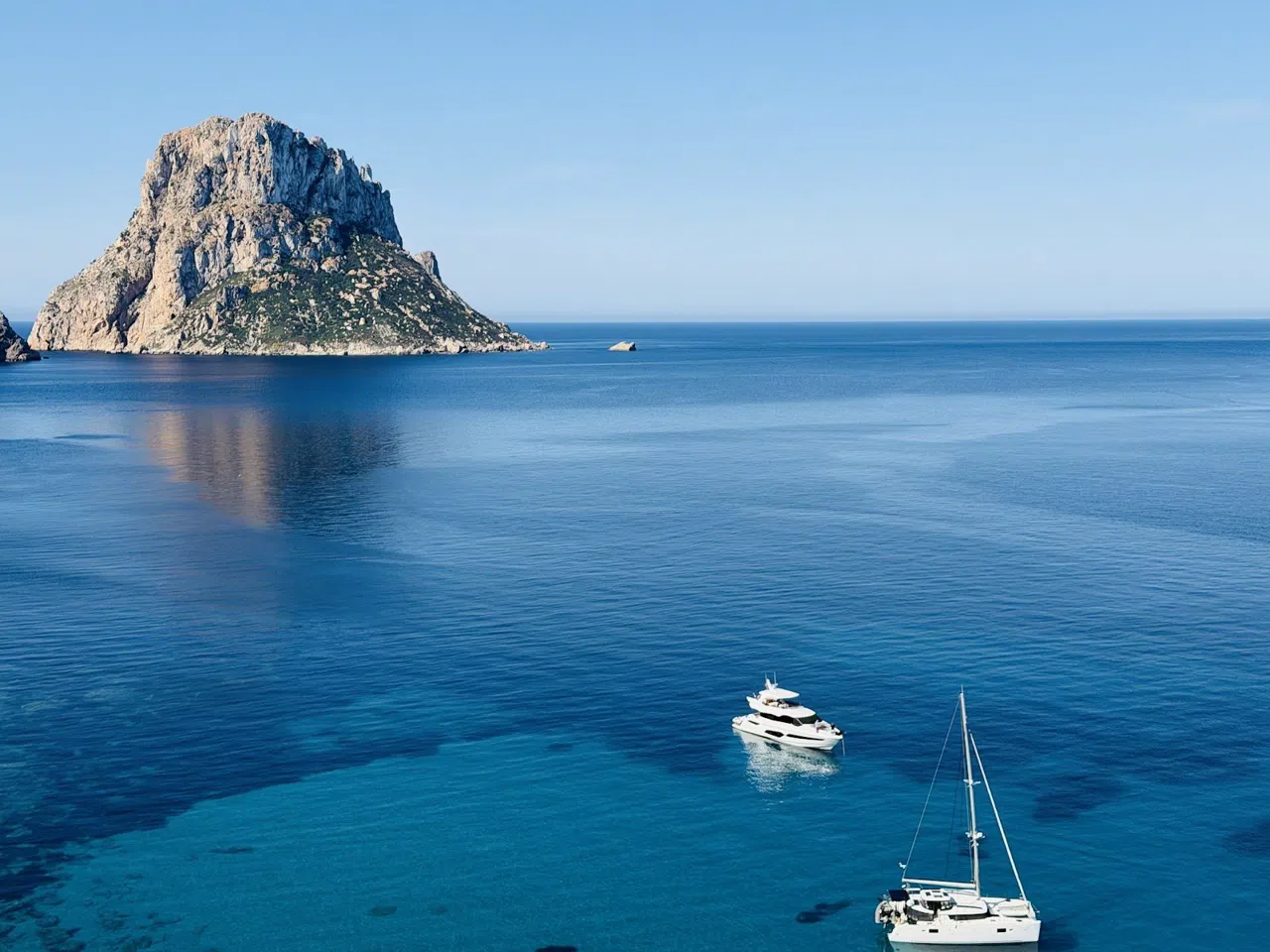

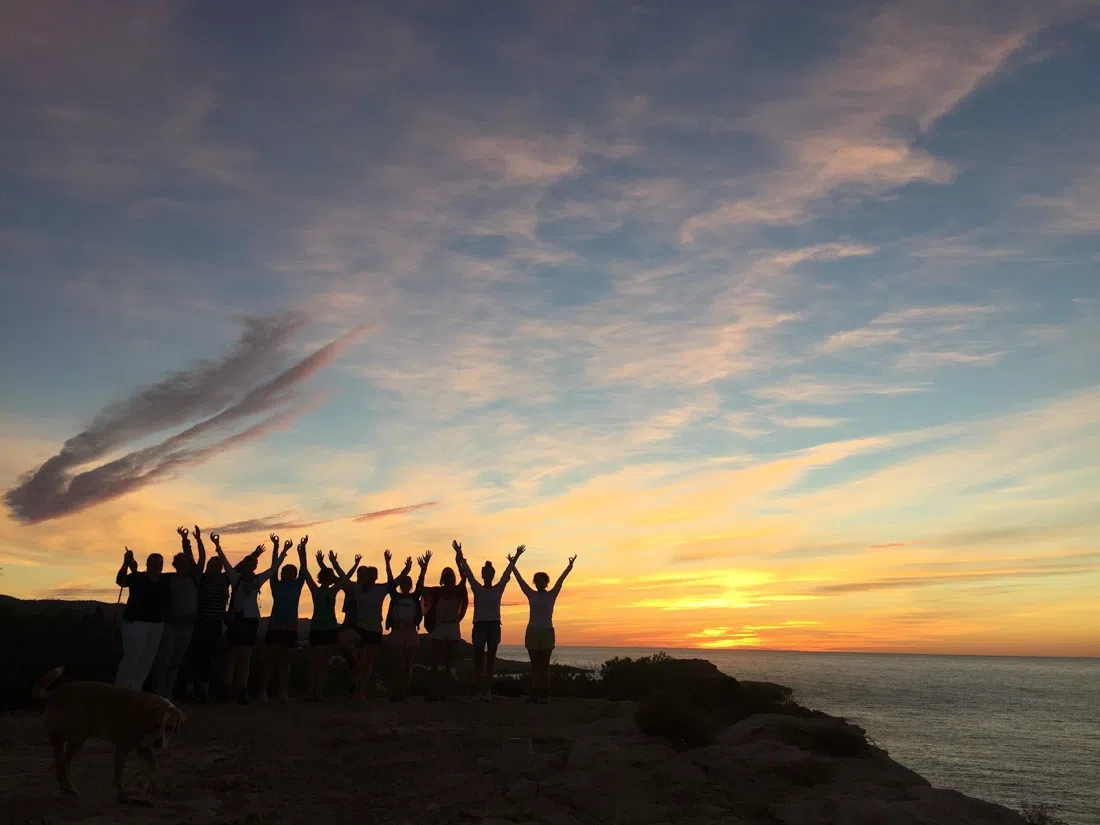
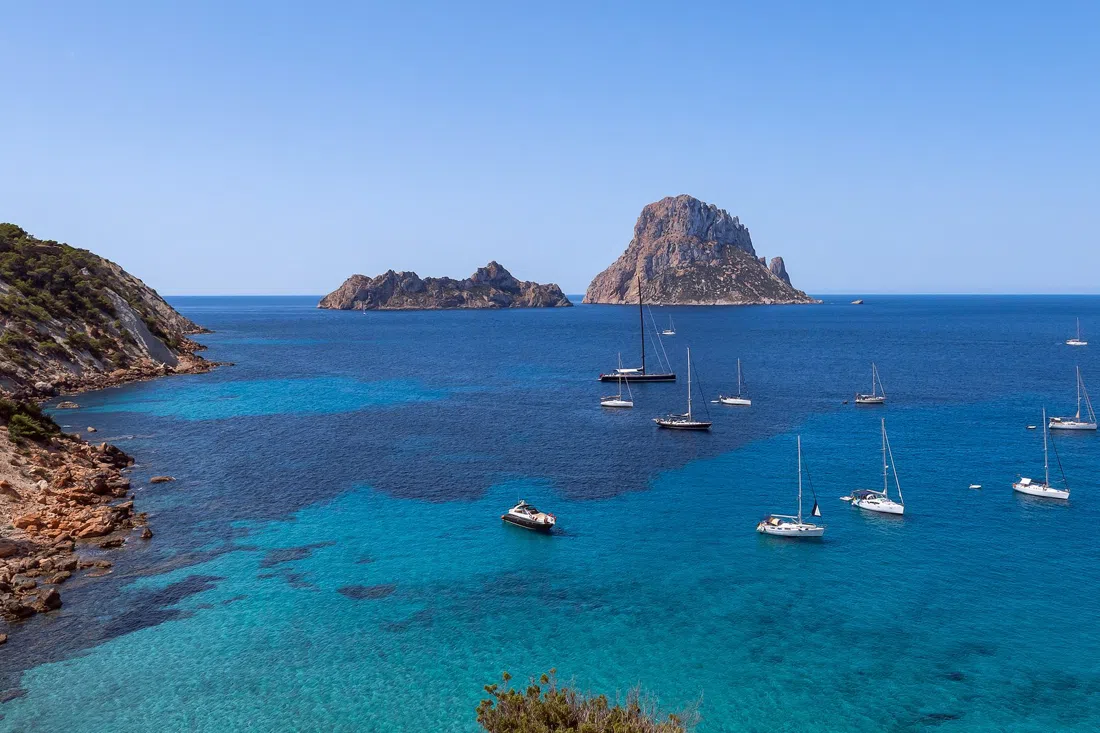
Es Vedrà rises 382 metres out of the Mediterranean like something dropped from a great height, a limestone island that seagulls circle and legends cling to. From the cliffs above Cala d'Hort, on Ibiza's southwest coast, it turns the colour of a bruise at dusk, then gold, then a flat grey-black silhouette against a sky still burning orange behind it. Every evening a small crowd gathers to watch this happen, and by the time the sun drops behind the rock, most of them have stopped talking.
The Rock and Its Myths
Es Vedrà has been claimed as everything from the tip of lost Atlantis to the resting place of sirens who lured sailors onto its rocks — a legend some trace to Homer, though nobody can point to firm evidence he meant this particular island. What's better documented is the more recent folklore: divers and sailors have long reported compass needles behaving oddly near the rock, and by the 1970s a mix of hippies, mystics and the merely curious had turned Es Vedrà into one of the Mediterranean's best-known "magnetic anomaly" sites, spoken of in the same breath as a handful of other supposedly anomalous spots around the world. No serious survey has confirmed anything unusual about the local magnetic field, but the story persists partly because Es Vedrà looks the part — a sheer, uninhabited monolith that seems to generate its own weather, wreathed in cloud when the rest of the coast is clear.
The island is protected as a nature reserve today, home to a lizard subspecies found nowhere else on earth and a colony of Eleonora's falcons, and landing there isn't permitted. Which is, in a way, the point: Es Vedrà is a place you're meant to look at, not visit, and an entire micro-economy of viewpoints, restaurants, hikes and boat trips around Cala d'Hort has grown up around exactly that ritual. For the rest of what's worth doing on the island beyond this stretch of coast, the Ibiza guide covers it in full.
Where to Watch the Sunset
The obvious first stop is the Mirador de Cala d'Hort (Cala d'Hort), the official viewpoint and car park above the beach, and it's the one to send people to. It's free, open-access, and needs no booking, which makes it fine for groups, families, anyone. The trade-off is that "fine for groups" and "good sunset spot" pull in different directions once the sun actually starts going down: this is standing-room-only right at the moment everyone's there for, so arrive at least 30–45 minutes early if you want an unobstructed rail spot rather than a view of the backs of other people's phones. A roughly 200-space car park opened here in 2025 and remains free as of 2026, though paid parking is expected to follow, so don't assume that stays true indefinitely.
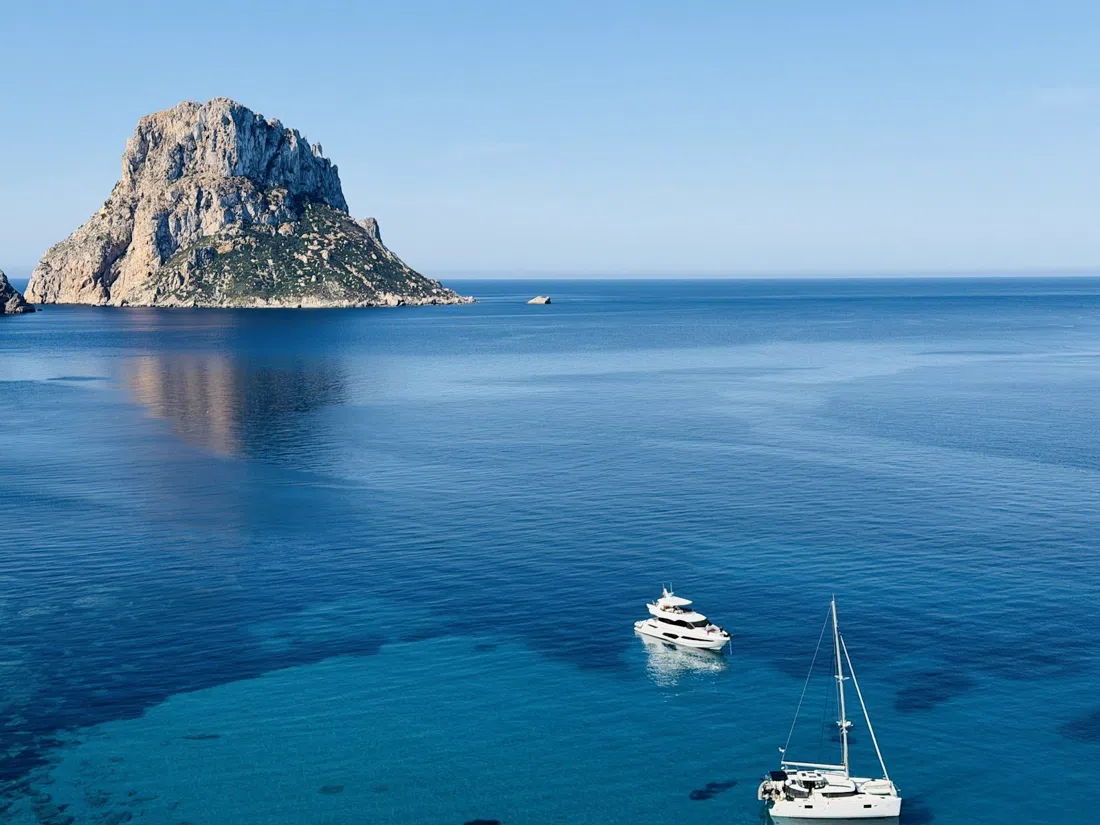
It's worth being explicit about a change here: for years the go-to spot was a different, informal mirador further along the cliff, on private land. Years of litter and illegal parking led the owners to fence it off over the winter of 2024/25, and it's no longer accessible. If an old blog post or a friend's photo from a few years back points you toward "the mirador at Cala d'Hort" without more detail, this is the one they mean — and it's now closed. The official platform and its new car park is the legitimate, current alternative, and the only one worth planning a trip around.
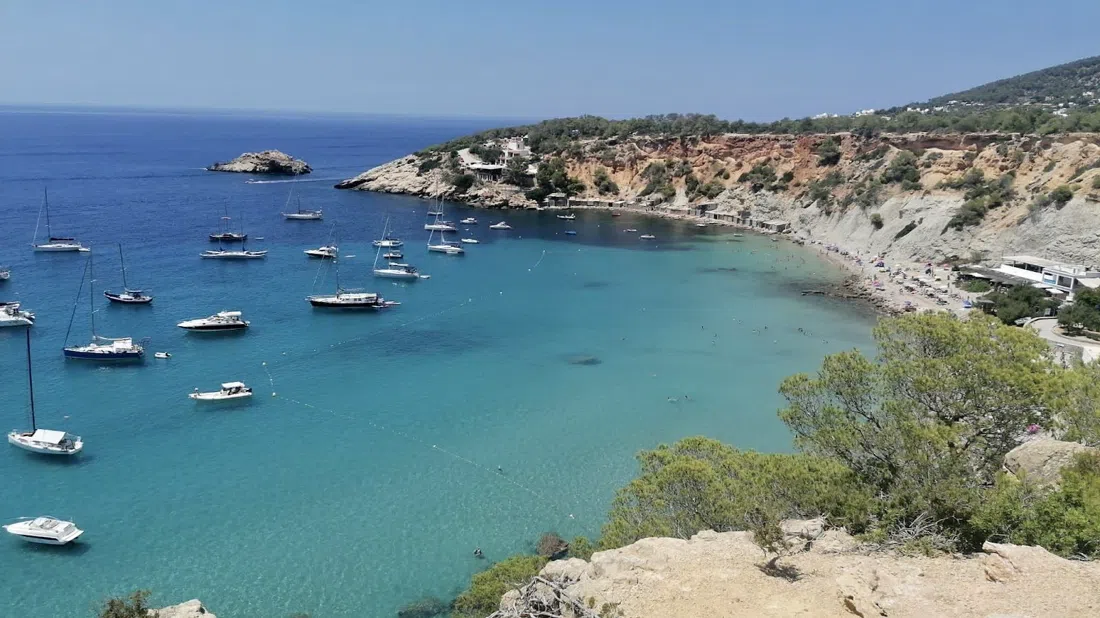
For the classic ground-level shot — sun dropping directly behind the rock, its reflection running out across flat water — head down to Cala d'Hort Beach (Cala d'Hort) itself instead of the clifftop. Most of the genuinely iconic Es Vedrà sunset photography you'll have seen was taken from roughly this angle, at sand level rather than from above. It's an open beach with plenty of room, so groups aren't a problem in the way they can be at the mirador, but in July and August it fills fast — get there well before sunset, not just before. It's free to use, though sunbeds and umbrellas cost extra.
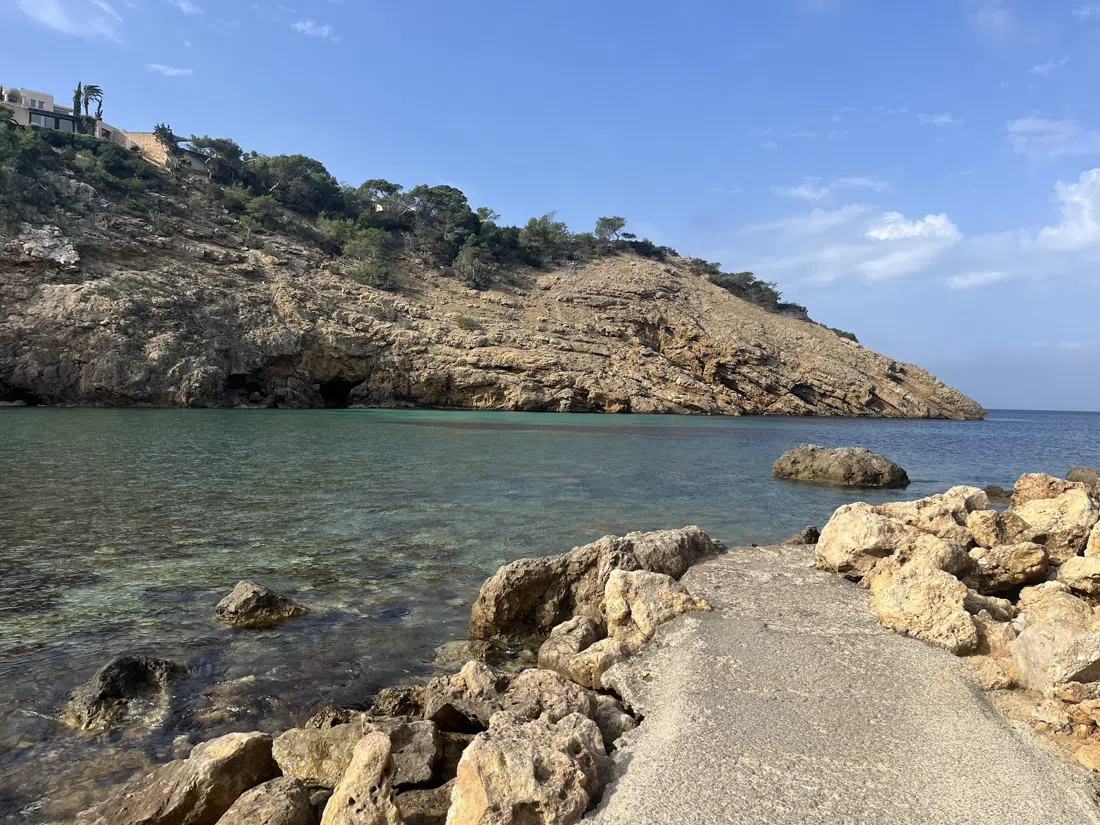
If both of those sound too busy, Cala Molí (a 10-minute drive north of Cala d'Hort) is the quieter alternative worth knowing about. It's a smaller open beach with Es Vedrà still in frame, and it's genuinely calmer — a reasonable plan B once word gets around that Cala d'Hort is packed, or simply the better choice for a couple who want the view without the crowd. It's free, unguided, and no less real a sunset for being less photographed.
Dinner With a View
Booking a table with Es Vedrà in the frame is one of the more reliable ways to guarantee a good sunset even if the weather or the crowds don't cooperate at the viewpoints, and there are three real options at Cala d'Hort, each a notch apart in price and formality.
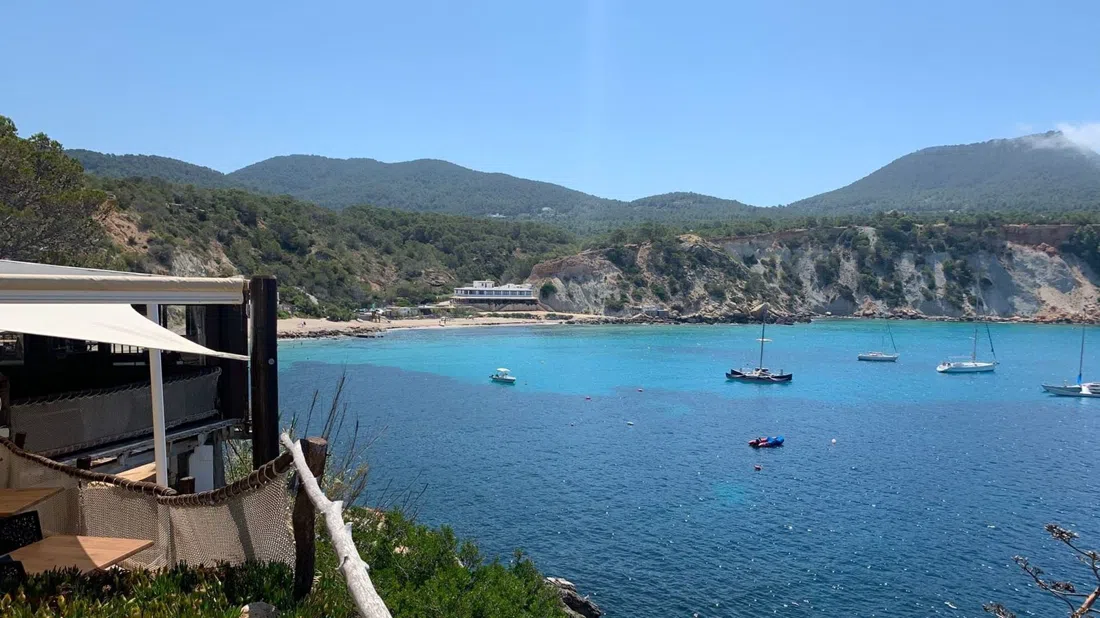
Es Boldadó (clifftop above Cala d'Hort) is widely considered the single most dramatic dining view of the rock on the island, and it charges accordingly — expect €€€, with seafood and rice dishes on the menu and lobster priced by the market. It does take groups, but tables are genuinely limited given the setting, so treat a reservation as essential in season rather than a nice-to-have; this is not a place to turn up to at 8pm in August without one.
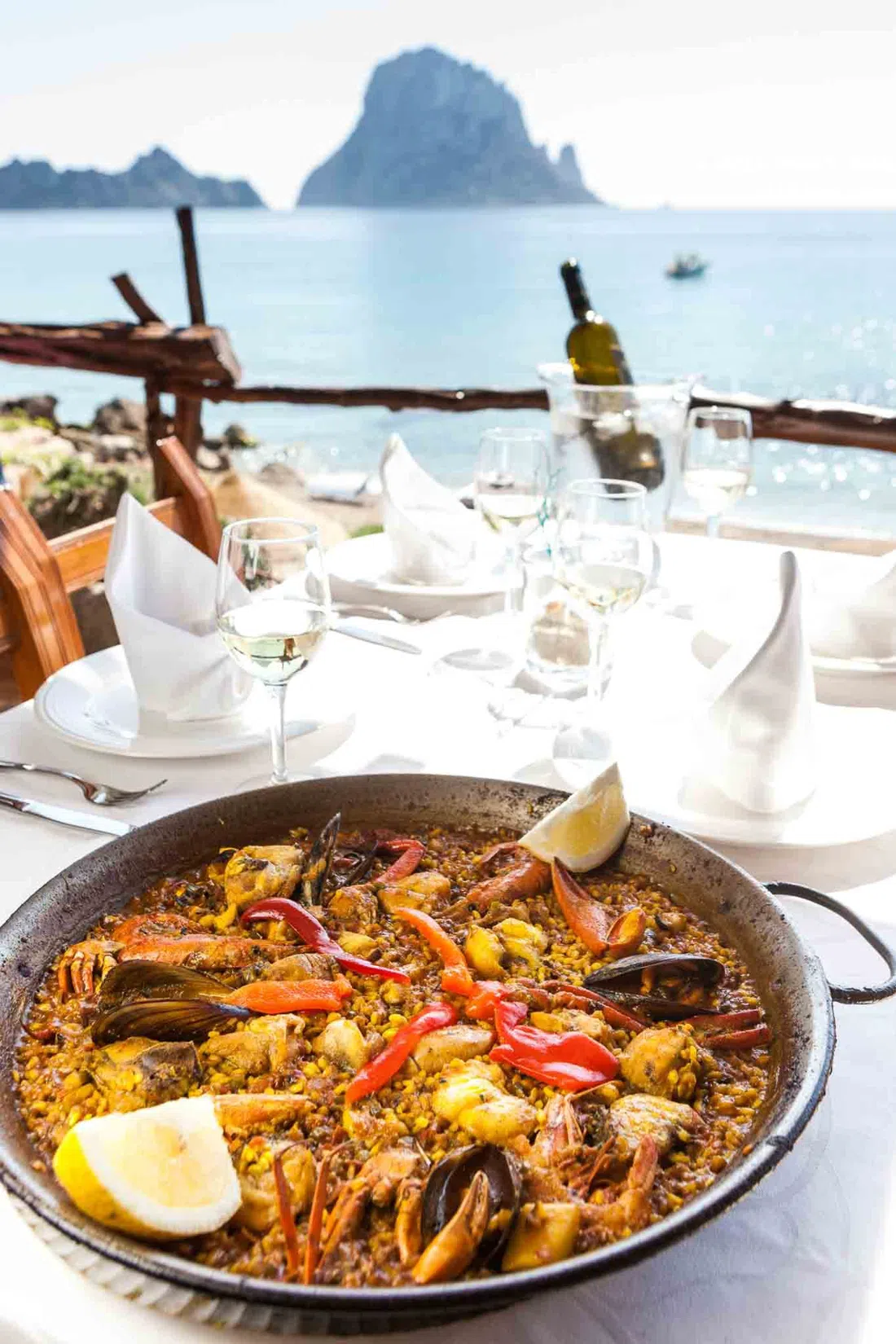
Down on the sand, El Carmen Cala d'Hort (Cala d'Hort beachfront) is the more relaxed, family-run option, and locally it's regarded as the reference paella at this beach — sitting right on the sand with the rock as a backdrop rather than perched above it. It runs €€–€€€ depending on what you order, groups are genuinely welcome, and booking ahead in peak season is still the safer move even though the vibe is looser than Es Boldadó's.
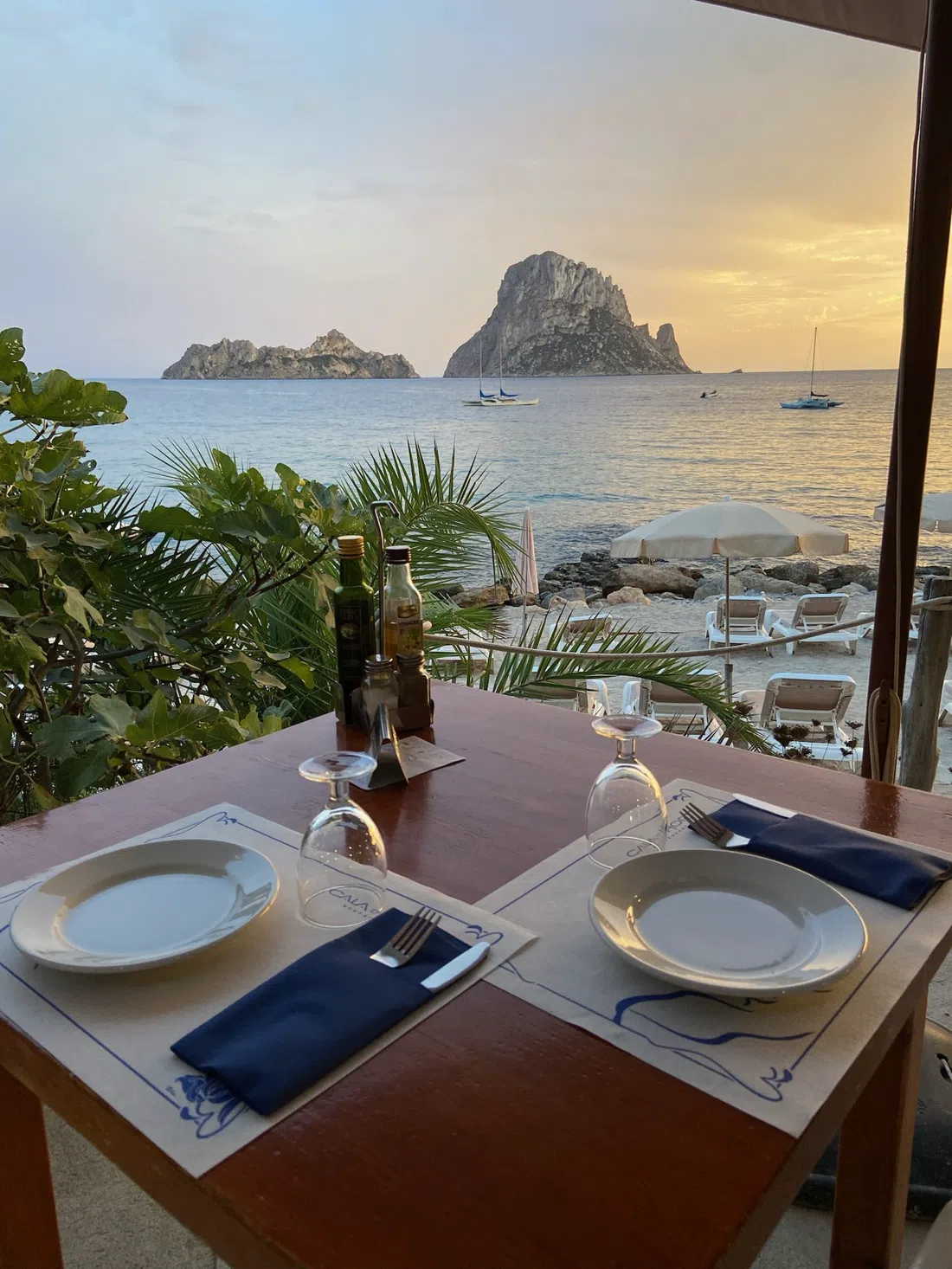
The third option, Restaurante Cala d'Hort, known locally as Ca na Vergera (Cala d'Hort beachfront), is the oldest of the three, still run by the founder's children, and it's a large operation that handles groups comfortably. It's the most affordable at €€, built around guisat de peix — an Ibizan fish stew — alongside paella and grilled fish, and it's the sensible backup if the other two are booked out, not a consolation prize.
On Foot: Trails Toward Es Vedrà
For readers who want more than a viewpoint, three walking routes and one guided option get you physically closer to the rock, with very different levels of effort and daylight requirements.
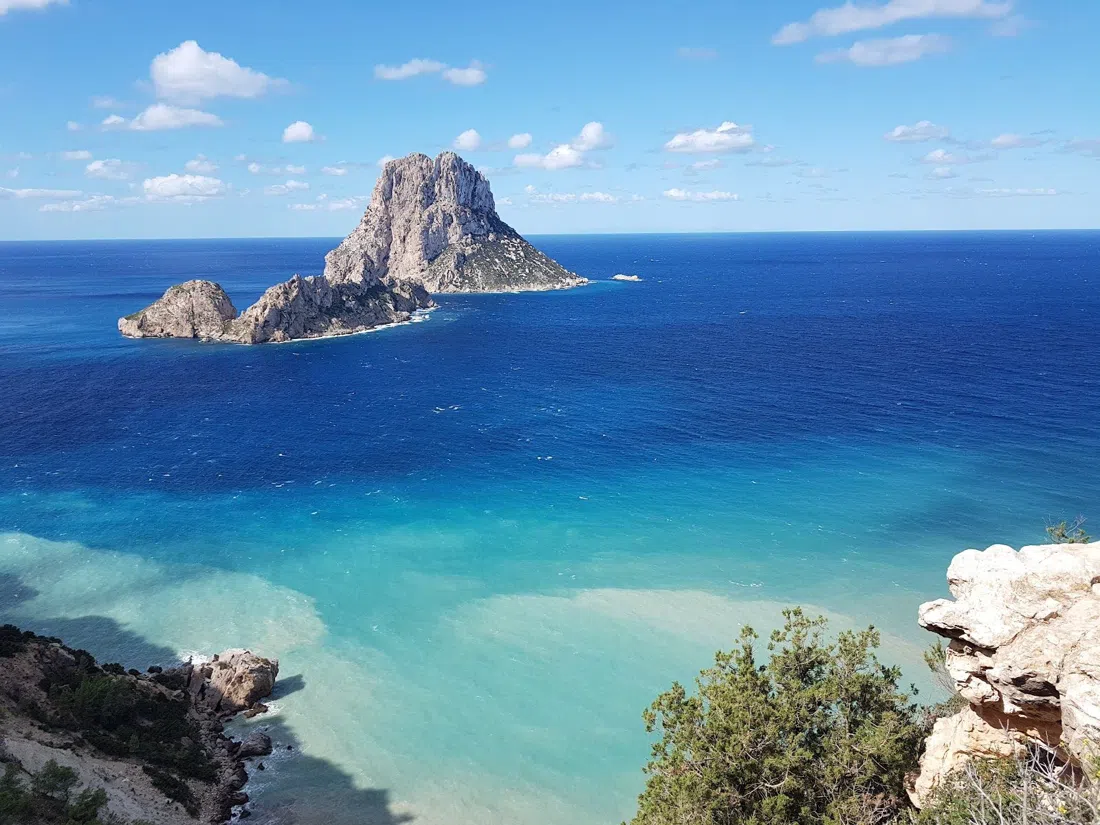
The Torre des Savinar, known as the Pirate Tower (Sant Josep–Cala d'Hort road), is the easiest of the hikes — a roughly 30–40 minute round trip from the parking area, free, unguided, open to anyone reasonably fit. It sits almost directly opposite Es Vedrà and is arguably the single best up-close, human-scale angle on the rock without getting on a boat. Built in 1763 as a lookout against pirate raids, its nickname is what fuels the popular idea that pirates once watched Es Vedrà from here — a nice story, but historians treat the link as folklore rather than established fact. Practically: the final stretch is steep, there's no lighting, and there are real cliff edges, so this isn't a spot for strollers or a large group after dark — walk it in daylight, before sunset, not during.
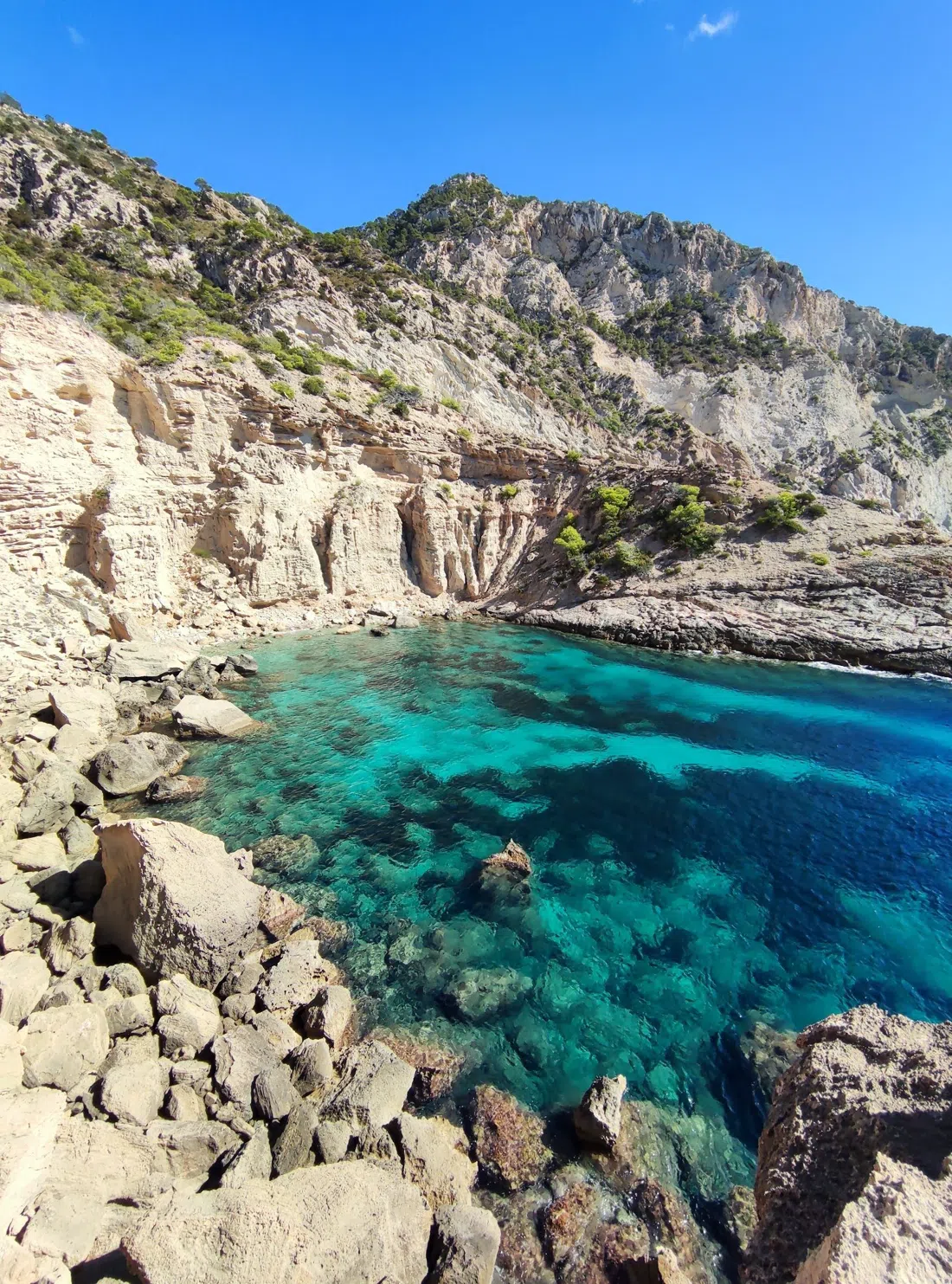
Atlantis, properly Sa Pedrera de Cala d'Hort (inland from Cala d'Hort), is a different proposition entirely — an old quarry reached via a steep, roughly 30-minute scramble down loose rock, not a maintained path. It's free and unguided, but it isn't suitable for large groups or anyone unsteady on their feet; the descent is genuinely loose stone and has caused injuries. The reward is real: swimmable rock pools carved into quarry walls that 1960s and 70s hippies decided looked like a lost city, hence the name. If the scramble sounds like too much, it's also reachable by kayak or boat, which is arguably the smarter way in for most people.
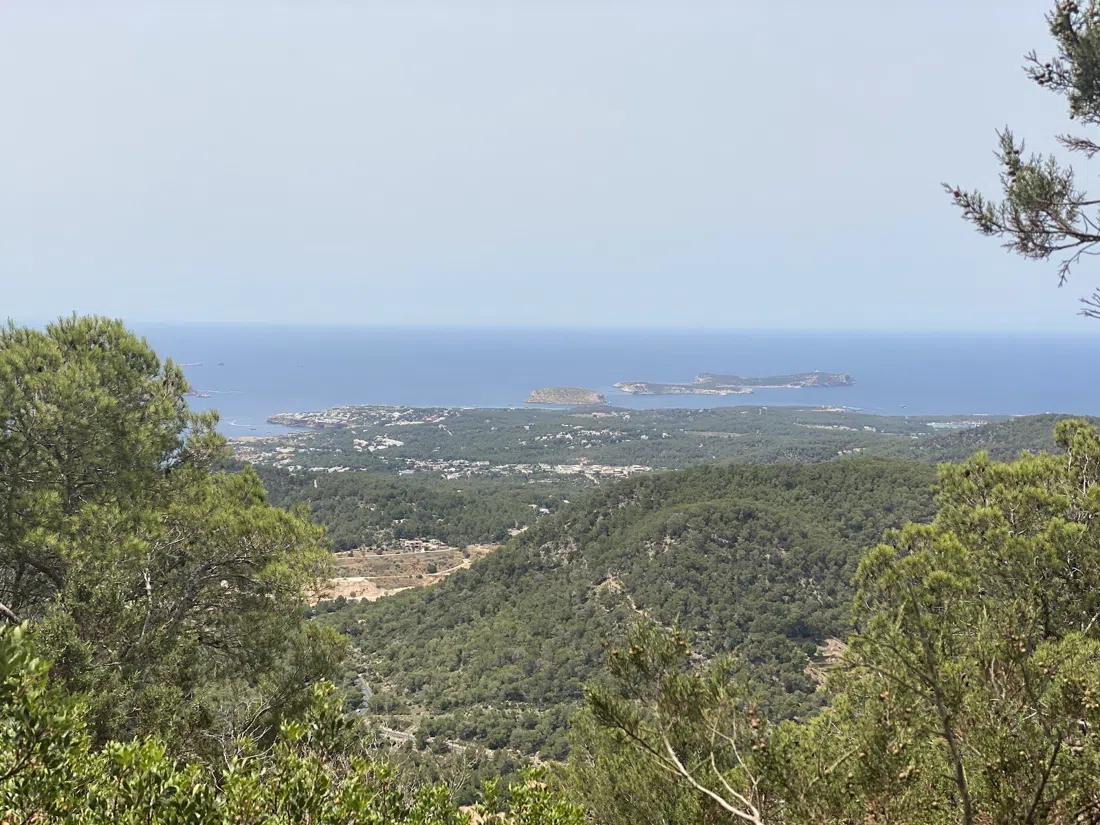
For a completely different kind of view, Sa Talaia de Sant Josep (waymarked trail from Sant Josep town square) is a longer walk — 2 to 3.5 hours depending on route — that trades the close-up cliff shot for a full panorama of Es Vedrà as part of the whole island. It's free, unguided, and fine for a fit group, and it's worth suggesting to anyone who's already done the crowded coastal viewpoints and wants the mythic wide shot instead of another close-up.
Anyone who wants to get closer to the old fenced-off viewpoint opposite Es Vedrà — the one now closed to casual visitors — has one real option left: Balearic Outdoor Adventures (guided hikes from the Cala d'Hort area), run by Swiss UIMLA mountain guide Stivi. Groups are capped at around ten people by design, and private group bookings are possible too, at €€ per person for a half-day guided hike. Stivi's outfit is one of only two with landowner permission to bring hikers into that fenced-off land, which makes it, at the moment, the most reliable legitimate way to see that particular angle up close rather than trying to find a gap in the fence.
On the Water
Seeing Es Vedrà from the sea removes the crowd-management problem entirely, and there are two very different ways to do it.
Nautilus Ibiza, also run under the name Capitán Nemo boat trips (sailing Ibiza's southwest coast), is a 37-year-old family operator and the easiest, no-experience-needed way onto the water here. It runs as a shared group cruise but can also be chartered privately, works well for families, and costs €€ per person for a three-hour trip that includes a swim stop right by the rock and a snack. It's the low-effort option: no paddling, no scrambling, just a boat that gets you close.
Ibizaventura (departing from Cala d'Hort), by contrast, is a guided sea-kayak outfit — small groups, no experience required, and kids from age four go free. The signature trip is a 2.5-hour sunset kayak, all gear included, at €€ per person, timed so paddlers watch the light hit the rock from sea level as the sun goes down, with a snorkel stop at Atlantis worked into the route. It's more active than the boat trip and better suited to couples or small groups who want to be doing something rather than just watching from a deck.
Getting There, Money, and Timing
Cala d'Hort sits on Ibiza's southwest coast, a scenic but winding 30–40 minute drive from Ibiza Town depending on traffic, mostly via Sant Josep de sa Talaia. There's no train on the island, and bus service to Cala d'Hort itself is limited and not built around sunset timing, so a hire car or taxi is the realistic way to get there and back for most visitors — factor in that the return drive happens in the dark once the sun's gone down. If you're staying centrally, the Ibiza hotel search is worth checking for a base that keeps that drive manageable rather than adding an hour each way.
Cash still matters here: some of the smaller beach restaurants and casual vendors around Cala d'Hort don't reliably take cards, so carry euros. Card payment is standard at the sit-down restaurants and tour operators, but don't assume it everywhere.
On timing, sunset itself shifts through the year — roughly 21:15–21:30 in June and July, drifting earlier through August and into September — so check the actual time for your date rather than assuming, and build in the arrival buffer at the mirador or beach described above. Budget-wise, this is an inexpensive evening by Ibiza standards if you stick to a viewpoint and a casual dinner, largely just the cost of a car and a meal, and a genuinely expensive one if you book Es Boldadó at the height of season with lobster on the table. Both are legitimate ways to do it in 2026; the rock looks the same either way.